
Summer Reading: Celebrating Voices from Around the World
Summer Reading: Celebrating Voices from Around the World
Celebrating remarkable stories of courage and determination from conflict-affected countries
As we embrace the warmth of summer (sometimes metaphorically, depending on the weather!), we invite you to join us in exploring captivating narratives penned by talented female writers from around the world.
This curated summer reading list celebrates the rich diversity of cultures, histories and personal experiences through the lens of authors from eight conflict-affected countries where we work.
Dive into these stories that promise to inspire meaningful conversations and highlight universal truths about the human experience; reminding us that, despite our own origin stories, there is so much more that unites than divides us.
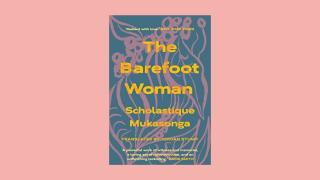
The Barefoot Woman
Scholastique Mukasonga (Rwanda)
"Her bare feet pressed deep into the memory of the earth."
Scholastique Mukasonga's memoir The Barefoot Woman beautifully captures the resilience of Rwandan culture amidst the turmoil of genocide. Through Mukasonga's heartfelt storytelling, we honour her mother's strength and the traditions that sustain their community in the face of unimaginable loss – and the glimmers of hope that follow it.
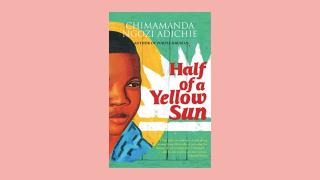
Half of a Yellow Sun
Chimamanda Ngozi Adichie (Nigeria)
"The world was silent when we died."
Chimamanda Ngozi Adichie's Half of a Yellow Sun transports us to Nigeria during the Biafran War, weaving together the lives of characters whose destinies are shaped by love, loyalty and the tumultuous events unfolding around them. Adichie's iconic prose invites us to reflect on the impact of conflict on personal identities and societal norms.
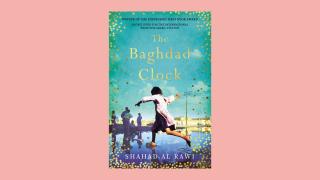
The Baghdad Clock
“Some meanings exist inside us but are sleeping.”
Set against the backdrop of 1990s Baghdad, Shahad Al Rawi's The Baghdad Clock offers a heartfelt exploration of friendship and hope through the eyes of two young girls. Al Rawi poignantly captures the essence of everyday life amidst political upheaval, highlighting the dreams of Iraqi youth and their determination to create a brighter future.
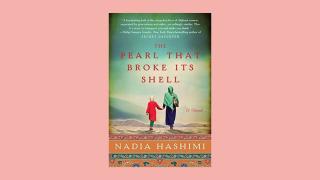
The Pearl That Broke Its Shell
Nadia Hashimi (Afghanistan)
“The human spirit, you know what they say about the human spirit? Is is harder than a rock and more delicate than a flower petal.”
Nadia Hashimi's The Pearl That Broke Its Shell intertwines the stories of Rahima and Shekiba, Afghan women separated by generations but connected by their yearning for autonomy in a patriarchal society. We’re given a glimpse into the realities Afghan women face as they navigate complex cultural norms and societal expectations.

The Tiger's Wife
“These stories run like secret rivers through all the other stories of his life.”
Téa Obreht's The Tiger's Wife blends folklore with a contemporary narrative set in post-conflict Balkans, where a young doctor uncovers family secrets amidst a landscape haunted by history. Readers are treated to lyrical prose that invites us to ponder themes of memory, identity and the enduring impact of war on personal and collective narratives.

Sworn Virgin
Elvira Dones (Kosovo)
“She was the only girl in the village enrolled in university. She didn't want to have children, she just wanted books. In the middle of the mountains you couldn't say this if you were born a woman."
Elvira Dones' Sworn Virgin explores the Albanian tradition of sworn virgins through the story of Hana, who adopts a male identity to escape societal constraints and pursue her dreams. Dones' novel challenges gender norms and champions the strength of women who, against all odds, are forging their own paths in a rapidly changing world.
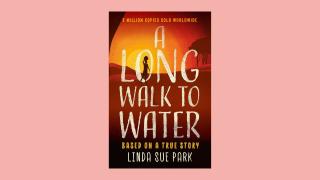
A Long Walk to Water
Linda Sue Park (South Sudan)
“One step at a time, one day at a time, just today, just this day to get through.”
Based on a true story, Linda Sue Park's A Long Walk to Water follows the lives of two young protagonists in war-torn South Sudan—Nya, who must trek long distances for water, and Salva, a young boy separated from his family by conflict. The immersive narrative sheds light on the stark challenges survivors of conflict face amidst daily adversity, highlighting the ongoing humanitarian crisis in South Sudan.
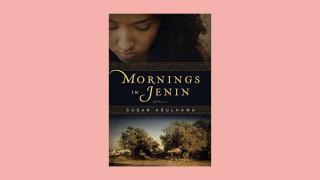
Mornings in Jenin
Susan Abulhawa (Palestine)
"We're all born with the greatest treasures we'll ever have in life. One of those treasures is your mind, another is your heart."
Susan Abulhawa's Mornings in Jenin spans generations of a Palestinian family's experience, offering an unflinching portrayal of displacement, resilience and the enduring hope for justice amidst the Israeli-Palestinian conflict. The empathetic storytelling encourages us to contemplate the universal need for belonging and peace — a message that is more timely than ever.
The story continues
Storytelling connects us all
Which of these compelling reads resonates with you the most? Do you have any favourite books or authors?
We would love to hear about them. Share your thoughts and recommendations on social media tagging us @womenforwomenuk. Happy reading!
Continue reading
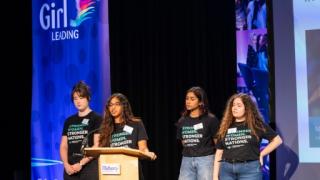
In October 2025, students from over 30 schools across the UK, Mexico and Kenya came together for the Global Girl Leading Summit. Read about how our #PowerToChange workshop equipped more than 300 girls with the skills, confidence and solidarity to lead change in their communities.
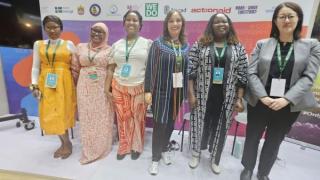
Following her recent experience at the second Africa Climate Summit (and with COP30 about to launch in Brazil), Maryline Njoroge, our Global Policy and Advocacy Manager, shares her reflections on how gender equality continues to be sidelined from high-level policy on climate change action - and what we can do about it.
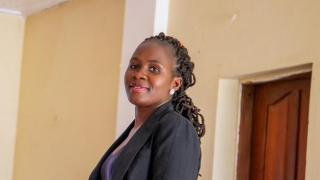
Poni Abraham is our Advocacy and Communication Coordinator in South Sudan. After being abducted, she has found renewed strength for her work with other women survivors of conflict and violence. She says, "this experience didn’t break my spirit – it rebuilt it. It reminded me why this work matters, why we can’t give up, even when the world feels cruel and uncertain". Read her story.

All women remember their teen years – some with joy, others with pain, and most with a hormonal tangle of both. When I think of my own adolescence, if I scroll back from the fever dream that is sixteen and fifteen and fourteen and land on that hopeful, fresh-faced moment that is being twelve years old, one of the first things I think of is Women for Women International.

Women for Women International is gravely alarmed by the UN Commission of Inquiry’s finding that Israel is committing genocide in Gaza - a determination that recognises what women and our partners in Palestine have been sharing with us for months. The Commission concluded that four of the five genocidal acts defined under the 1948 Genocide Convention have been carried out in Gaza - namely killing, causing serious bodily or mental harm, deliberately inflicting conditions of life calculated to bring about destruction, and imposing measures intended to prevent births.

How do you mourn for a loved one if you're still holding out hope that they might be alive? In this blog, hear from women facing ambiguous loss on how they've found courage in their community, even when closure never comes.

In July 2025, students at Seven Kings School hosted a powerful week of fundraising in support of Women for Women International. In this blog, we hear directly from Wania - the student leading the project - as she reflects on the importance of activism, sisterhood and what it means to create meaningful change.
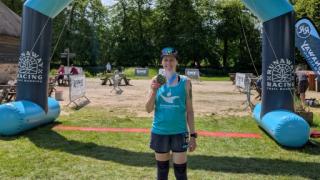
In May 2025, Natalie bravely took on an 86-mile ultramarathon in support of Women for Women International. In this blog, we learn about the importance of sisterhood, determination and strength, and how these can inspire us to support the women we serve.
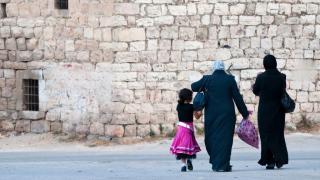
To mark International Day for the Elimination of Sexual Violence in Conflict, we are amplifying the voices of women who are not just enduring the harsh realities of war and displacement - but who are also working every day to protect, support and empower others. Hear from two women in Palestine.
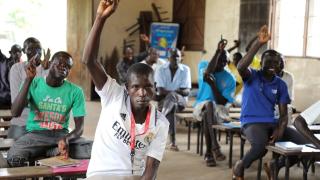
At Women for Women International, we count a number of dedicated and compassionate male staff among our global community working towards a more equitable future. I spoke to several of our male colleagues – from Iraq and South Sudan, to DRC and the UK. I asked what allyship means to them, how their work has shaped their understanding of gender justice, and what they’ve learned from the women in their lives. What emerged was not just a collection of stories, but a testament to the quiet, determined work of transformation – both personal and societal.
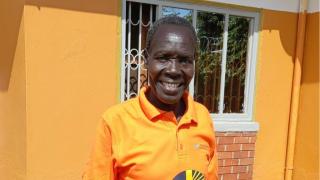
Florence Dumba is a social empowerment trainer at Women for Women International in South Sudan. Her work, working with survivors and creating safe spaces for women to heal from their trauma, is grounded in her own experience of being abducted twice.
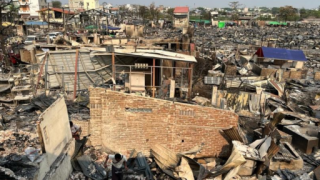
On March 28, 2025, a powerful 7.7-magnitude earthquake struck Myanmar, intensifying a crisis already marked by armed conflict, political instability, and widespread displacement. What was once a complex humanitarian emergency has now deepened into a compounded catastrophe - one that disproportionately affects women and girls. As infrastructure collapses and humanitarian access becomes even more restricted, the disaster has laid bare the urgent need for gender-sensitive responses in conflict-affected settings.