
The Cost of Menstruation Under Occupation
The Cost of Menstruation Under Occupation
Samar and Wafaa, two Palestinian women from the West Bank, share what menstrual hygiene really means when water is rationed, checkpoints are inescapable and shame around periods persists
Every year on the 28th May, the world marks Menstrual Hygiene Day – a moment to acknowledge period poverty and that access to safe, dignified menstrual care is not a given.
Around 500 million women and girls globally lack access to adequate resources and facilities each month – and the women and girls we serve in Palestine are no exception. Where menstruation takes place under occupation and against a backdrop of financial stress, water scarcity and cultural shame, periods are not merely a natural part of life, but a health risk, a barrier and a burden.
Samar and Wafaa, two women taking part in our Stronger Women, Stronger Nations programme in the West Bank, shared their reflections on menstruation under occupation, how their community is impacted and how our programme has helped.
Hear from Samar Ali
Samar told us that even before joining our programme, she knew about Menstrual Hygiene Day and its importance – for physical health, for psychological wellbeing and for breaking the stigma that surrounds women's bodies. What she also knows, from personal experience, is the gap between awareness and reality.
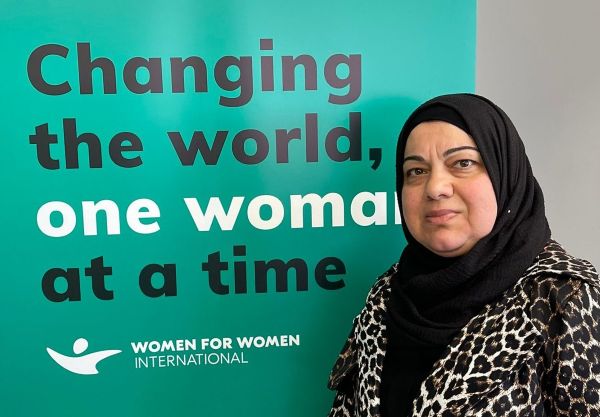
Period products are available in the West Bank. But for many families, "available" does not mean "affordable". Samar told us "they have become too expensive for most women here due to the very difficult economic conditions" and added that for families with several daughters, there is a financial burden that compounds quietly, month after month.
She shared, "Some women have tried to reduce costs by using alternatives such as clean, sterilised cotton cloths. However, these may lead to infections, fungal issues and leakage onto outer clothing, which is also not practical or comfortable."
Living under occupation only makes this more dangerous and undignified.
Women and girls are often forced to stand for long hours (six or more) at checkpoints, which can lead to leakage onto outer clothing, causing sweating and embarrassment.
These conditions cause more than social humiliation. Particularly in the summer's heat, women experience "infections and certain types of fungi that require extensive treatment".
In many areas, Samar tells us there is a lack of public toilets, and water can be severely limited – due to the closure of some supporting water lines by Israeli authorities – which makes bathing and maintaining good hygiene a very real struggle.
The cost of cleaning, disinfecting and sterilising products is high.
Samar doesn't shy away from naming the challenges women face, despite the social pressure many other women and girls feel when talking about periods. She shares that some communities in the West Bank are open to discussing menstruation and hygiene care – even the religious aspects associated with it. But "other communities remain closed and consider discussing these topics as inappropriate, believing it draws girls’ attention to things they should not think about. Therefore, it falls under the category “shame".
It is shameful to talk about it and even shameful to ask questions.
Hear from Wafaa
When we spoke to Wafaa, she specifically said she wanted to talk about period poverty from a health perspective, looking at both public and private facilities.
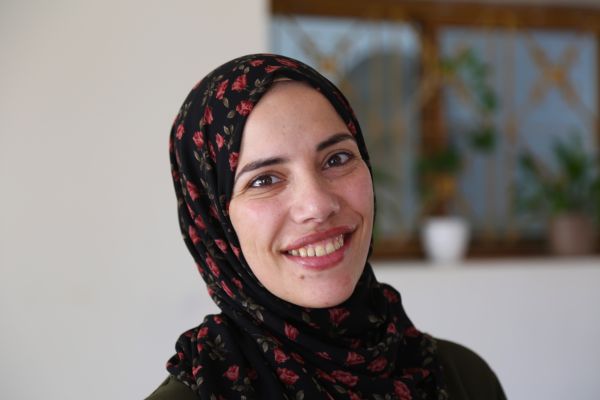
Reflecting on what Samar shared, Wafaa told us that in Palestine, especially in summer, water is not reliably available. Some households go months without a functioning supply and, for a woman managing her period, this is not an inconvenience – it's a health crisis.
There are homes where water is cut off for months.
Without water, personal hygiene during menstruation becomes nearly impossible and can lead to infections for women that, as Wafaa frames it, are "something beyond their control".
Wafaa also comments on nutritional gaps.
We do not have access to nutritional supplements or healthy food on a continuous basis.
As Wafaa knows all too well, resources in Palestine are limited. Our curriculum includes education on vitamins, proper nutrition and relief for menstrual pain – and even while healthcare centres are limited in the support they have available, Wafaa says this education helps her manage her symptoms, changes in her body and care for herself.
Time to end period poverty
Samar and Wafaa's honesty is also an important reminder that ending period poverty goes beyond providing products. Menstrual health is about far more than that. It is about water, safety, economics, political structures and awareness.
As with so many injustices, the first step is speaking out, ending the shame and fighting the stigma. That's why, as well as providing period products in active conflict zones like Sudan and Gaza to meet immediate needs, we also provide education about menstrual management, reproductive health and women’s rights – helping women reclaim confidence and control over their own bodies. Our programmes also offer skills training for participants in post-conflict countries like Nigeria and Afghanistan on how to sew their own reusable pads.
Samar commented on the education she has received through our programme, saying,
The awareness helps us and our daughters avoid many mistakes regarding our health, such as telling us that it is important to shower during our periods, which was usually considered as something not healthy in the past.
She learnt that "hygiene and proper care protect us from many reproductive health issues. Cleanliness of the environment is just as important as personal hygiene."
She also shared that,
If we allow ourselves to rest... we will probably return stronger and with more positive energy for the rest of the month.
All over the world, right now, someone on their period is making a warm cup of tea, taking a breath and giving themselves permission to rest. For the women and girls we serve in places affected by conflict, that moment of peace is harder to come by – but no less deserved.
Samar puts it simply: "Menstruation days are days for rest and drinking warm tea, not for heavy housework". This is a sentiment that will resonate with anyone who has pushed through a painful period to get through the day. This is not merely a fly-away comment on self-care advice – it's about permission. Permission to rest, to feel and to acknowledge, as she says, "all the hormone cycles our bodies go through".
Most importantly, the programme taught us how to love ourselves during this time of the month.
This sits at the quiet heart of Women for Women International's work. Our programmes are more than equipping women with resources, skills and knowledge. Our work connects women to stand in sisterhood and support one another. We help women to believe in themselves, their value and their worth. Every woman, every day of the month, deserves that much.
End period poverty
500 million women and girls lack proper access to menstrual products. In crisis settings, it is one of the last priorities. Your donation today can provide essential period products and education to women and girls who need it most.
Read more
Women in Afghanistan have seemingly been erased from public life. The de facto government is stripping back their rights, one restriction after another. But two years since the takeover, women refuse to back down. Read about how our brave and defiant Afghan sisters are taking a stand, wielding their power and holding onto hope.
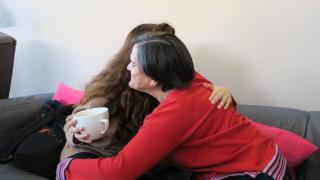
In conflict-affected countries where we have established offices and local teams, many women in our programmes are refugees or forcibly displaced. And when conflict emerges where we don't have local teams, we work where we can to identify partner organisations on the ground, with whom we meet the unique and urgent needs of women who are often overlooked in times of crisis.
Here are four spotlights on some of the crises we're responding to by serving refugee and displaced women - and ways you can help too.

World Refugee Week Reading List
subtitle:
In recent years, refugee literature has provided a way of educating the public about the truth behind the refugee experience. Women for Women International believes that knowledge is power, so check out our World Refugee Day Reading List to grow your awareness and understanding of the refugee experience for your own personal reading and to share with others.
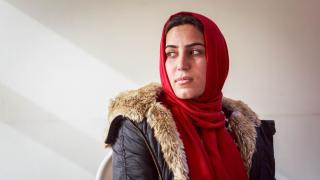
5 Myths & Misconceptions About Refugees
subtitle:
Shocking statistics and clickbait headlines perpetuate damaging stereotypes about refugees. By unpicking common myths and misconceptions, we increase our understanding and are better placed to help refugees heal and rebuild their lives.
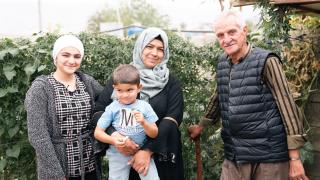
The Courage Behind Leila's Smile
subtitle:
In 2018, Leila's village in Damascus, Syria was bombed, killing two of her children and injuring her daughter so badly that she still struggles to walk properly today. Despite their injuries, Leila and her daughter made the difficult to decision to leave their home and seek asylum in the Kurdistan Region of Iraq. In the face of immense grief, Leila knew that she needed to move forward for the sake of her family.
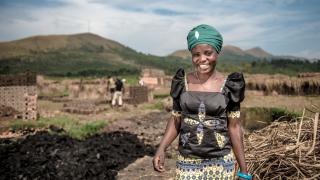
My Name is Cinama
subtitle:
After graduating from our 12 month programme in the Democractic Republic of Congo, Cinama went on to start her own brickmaking business. She now shares her knowledge with other women and is looked up to as a role model.
More than one year on from Russia's brutal invasion of Ukraine and our Managing Director, Sara Bowcutt, shared her reflections with Seida Sarić, Director of Žene za Žene International), our sister organisation in Bosnia and Herzegovina, and Kateryna Shukh, Vice President of Bereginja – Mariupol’s Women’s Association.
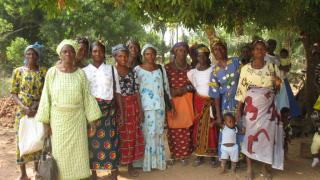
The UK Government recently published two long-awaited policies, reflecting how collective and sustained advocacy - anchored in women’s experiences - can contribute to small wins in a broader context of a global rollback on women’s rights, no matter how painstaking those advocacy efforts or granular those wins may feel. So, what are those small wins, and are they worth celebrating?
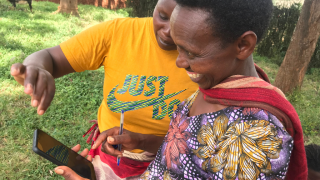
Across the world, women often have less access to technology, mobile phones and the internet compared to men. In fact, the majority of the 2.9 billion people who remain unconnected are women and girls. But evidence suggests that digital inclusion goes hand in hand with economic empowerment and gender equality.
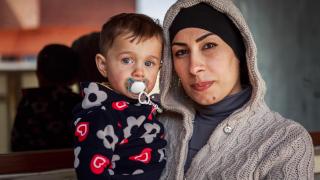
20 years since the war broke out in Iraq, we reflect on the impact of the war on women, our support over the years and hopes for the future.
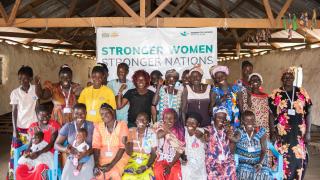
Women for Women International invests in the power of women living in these communities. As we celebrate Women's History Month, we reflect on the progress of women using their #PowerToChange in their lives and communities for generations to come.
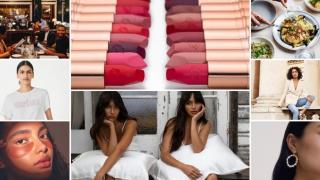
This International Women’s Day, we are heartened to have the support of our passionate partners and global community in creating the changes we want to see in the world. From beauty to dining to fashion and jewellery, there are many ways to invest in the strength of women, while sharing a gift or choosing a special item for yourself.