
Transforming Lives Together: Couples Connect in South Sudan
Transforming Lives Together: Couples Connect in South Sudan
Women for Women International is helping families transform their lives by fostering teamwork, financial independence and modern farming techniques - by piloting agricultural vocational training for couples
This innovative approach is part of our revised Men's Engagement Programme curriculum and encourages couples to work together, ensuring a better future for their families.
Here’s how the Couples Connect sessions are making a difference in Betty's life, and many others:
Betty's journey
moving forward after displacement
Displaced from her village during the 2016 crisis in South Sudan, Betty moved to the Ronyi Boma administrative division in Yei River County with her husband and their three children.
We lacked food, the children were constantly sick due to poor nutrition, and they often missed school.
To make ends meet, Betty borrowed money, sold firewood and opened a small restaurant. Farming, her true passion, was yielding little with her traditional methods due to the poor land conditions.
In March 2023, everything changed when Betty and joined our Stronger Women, Stronger Nations programme and participated in the pilot sessions for couples.
This pilot initiative aims to evaluate if couples' vocational training can lead to stronger economic outcomes for women compared to women-only vocational training. In addition to the standard agricultural training, which includes modern farming methods, the couples’ training has been adapted to:
- Educate men and women together on how to think about gender-sensitive divisions of labour
- Promote the equitable management of resources
- Foster gender awareness and an understanding how an agricultural family business operates
Each participant received a monthly stipend, a grant upon graduation to start-up their agricultural business, and farming tools and seeds.
Betty’s story is a testament to the pilot's positive outcomes for women:
With the new farming skills acquired, my husband and I embarked on joint farming.
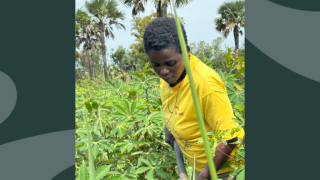
She continued, "He helped us get this large piece of land, and we applied all the new skills - from land preparation to harvesting and selling our products."
Today, my husband and I understand soil types, seasons and crop care. Our farm is thriving.
Betty's garden produce is sufficient to sustain her and her family, put her children through school and save for future needs.
She shared: "In my most recent harvest, I collected 4 basins of onions, 3 bags (50 kg) of peanuts, four basins of peas, and 4 bags of cassava. I am also now great at farm product business."
I would never have managed even half of this without the training and support from Women for Women International.
Changing Perspectives: A Husband’s Story
Engaging men in women's rights and power
For the men joining our Couples Connect vocational agricultural training, these sessions form part of a wider Men’s Engagement Programme curriculum, which is helping change patriarchal traditional norms and the perspectives of men in the community.
We spoke to Mawa, a programme participant, who joined our Couples Connect pilot sessions with his wife. He admitted that he had been a traditional, authoritarian husband, and that our programme helped him become a more supportive partner. As the training progressed, he began to appreciate his wife’s contributions and says he learnt the value of working together.
Today, my wife is the major breadwinner, and I support her in every way I can.
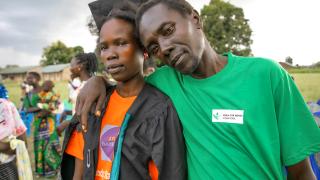
Mawa told us:
"In the programme, we learned about working together as a family, sharing responsibilities, communication in marriage, problem-solving and financial management.
Soon, I began to see reason in everything my wife was doing and I grew to appreciate her efforts in supporting me. Gradually, we started communicating again, and we would talk about business, farming and our family.
I started supporting her business, and we started working together."
Couples Connect Pilot: inital impact
more than training
The Couples Connect vocational training pilot, paired with our wider Stronger Women, Stronger Nations and Men's Engagement programming, appears to be leading to positive outcomes for couples in South Sudan.
We are in the process of conducting an internal evaluation that will be published later in the year to fully assess the success of the pilot approach. For the time being, this initiative is empowering couples to work together to:
- Enhance family unity: Couples learn to communicate effectively and share responsibilities, strengthening their family bonds.
- Promote financial independence: Participants gain financial management skills and receive grants to start or expand their businesses.
- Encourage modern farming techniques: Couples are trained in modern, practical farming methods to improve crop yields and food security.
- Foster community development: As families thrive, entire communities benefit from increased stability and economic growth.
Betty and Mawa’s stories highlight the impact of this new pilot in South Sudan.
Women for Women International is committed to engaging more couples in South Sudan and beyond. It is with thanks to our global community of supporters that this vital work is possible, helping families build a better future together.
-
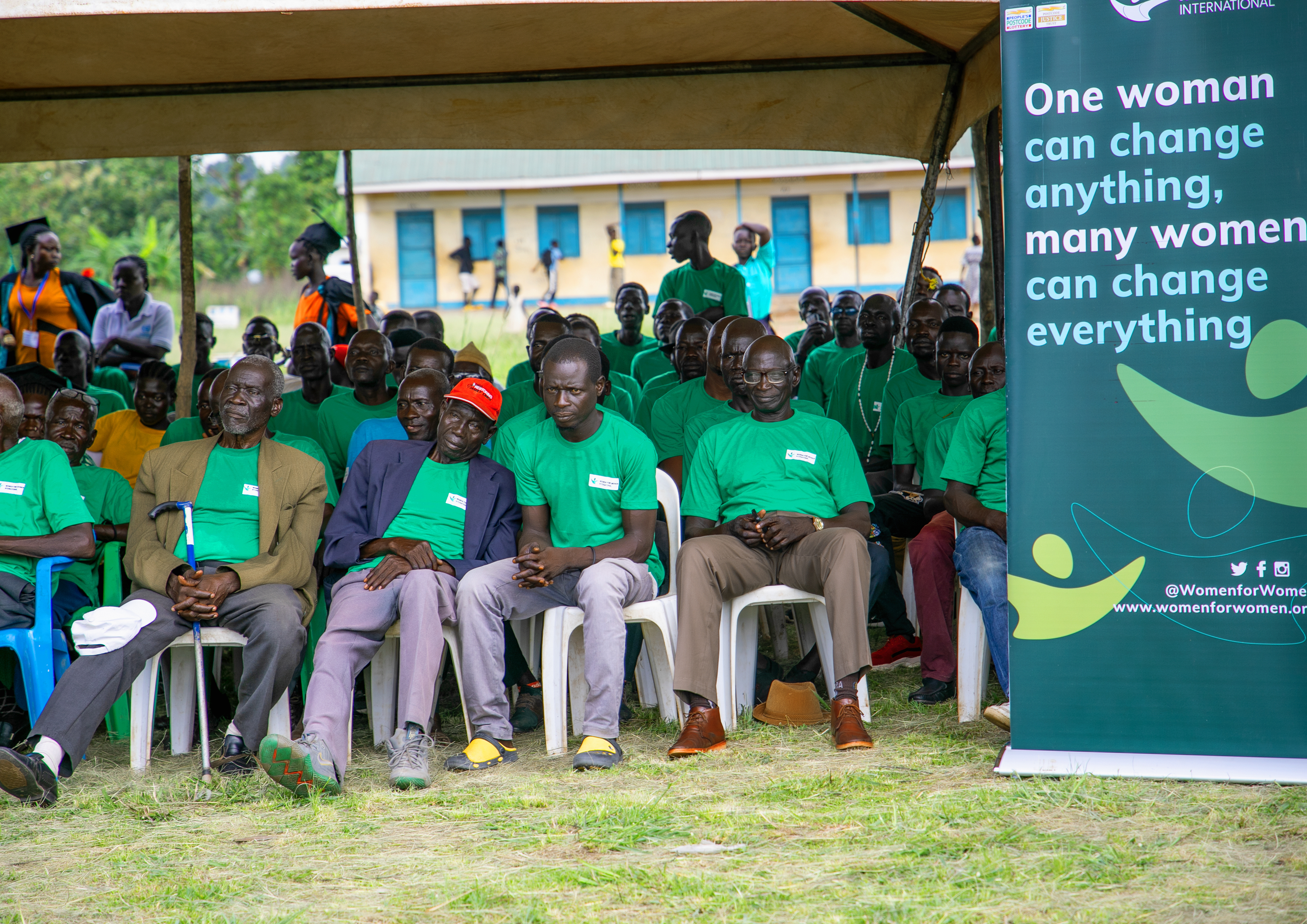
A group of men graduating the Men's Engagement Programme in South Sudan. Photo: Women for Women International -
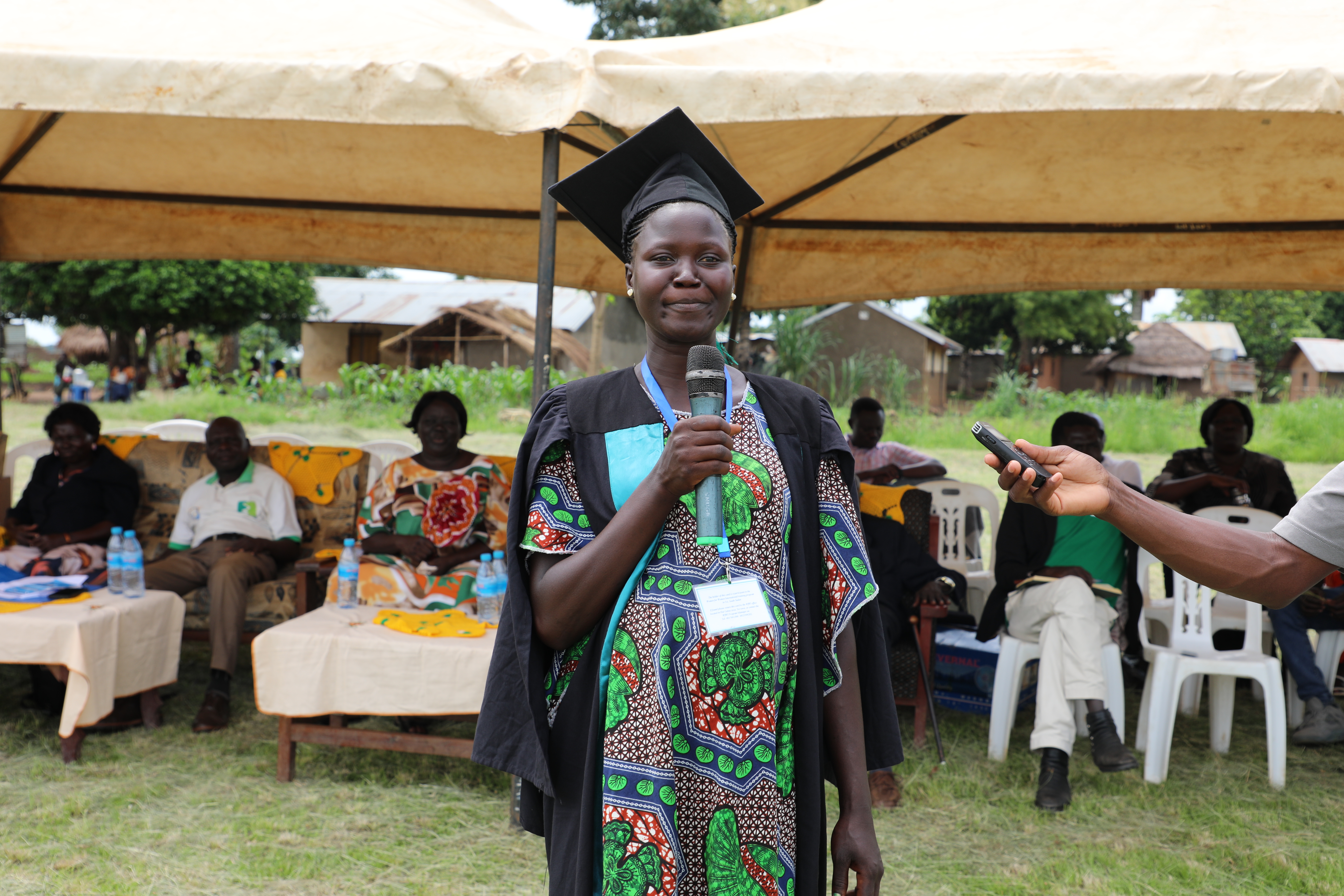
One of the women graduates of our Stronger Women, Stronger Nations programme addressing her fellow graduates, our team and other audience members at the graduation ceremony in South Sudan. Photo: Women for Women International -
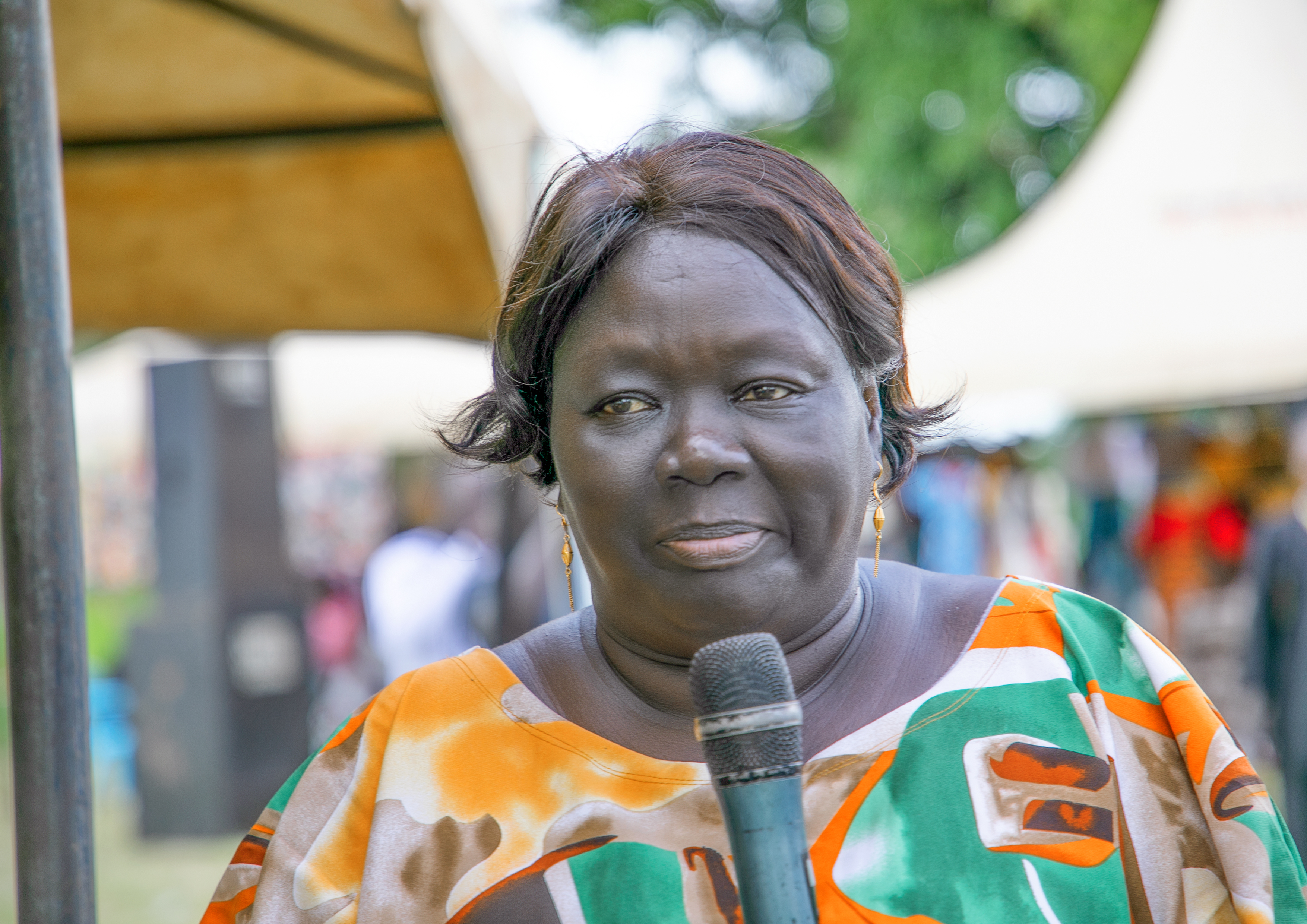
Marianne Kajokaya, Country Director of Women for Women International - South Sudan, proudly addressing programme graduates. Photo: Women for Women International



donate today
Help women survivors of war make a lasting difference in their lives, families and communities.
Give a gift today.
keep reading

This Women’s History Month, we've partnered with some of the UK's most-loved brands to celebrate the peace-building power of all women. You have the power to help women transform their lives and become powerful changemakers by shopping with purpose.
After nearly two years as our Fundraising and Marketing Officer, Daisy Bessell is stepping into a new chapter. Read her reflections on the lessons of uncertainty, the courage it takes to move forward without guarantees and the remarkable ways women living through conflict transform instability into opportunity, agency and local peacebuilding.
Imagining Peace
subtitle:
We asked women living through war and conflict: “If there were peace in your country today, what’s the first thing you would do?” Their answers are simple, yet profound - rebuilding homes, sleeping without fear, growing a small business or hugging loved ones without worry. From Gaza to South Sudan, from the DRC to Ukraine, these voices remind us what true peace means: safety, dignity and the chance to rebuild life with hope.
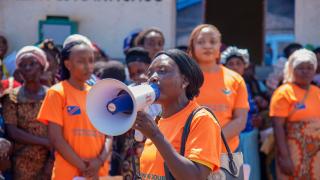
Women are deeply affected by conflict yet remain excluded from peace negotiations. This blog highlights why women’s leadership and inclusion are essential to building lasting, inclusive peace.
Women Peacebuilders You Should Know
subtitle:
From leading non-violent movements and advocating for human rights to rebuilding societies in the aftermath of conflict, women peacebuilders bring unique perspectives and lasting solutions to some of the world’s most complex challenges. This blog highlights the work of inspiring women who have shaped peace efforts across the globe and reminds us why women’s leadership is essential to achieving sustainable, inclusive peace.
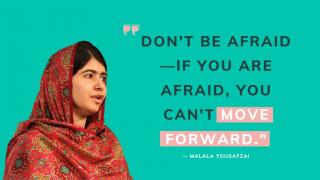
Women's History Month Quotes
subtitle:
Women’s History Month is a time to celebrate the voices, achievements and resilience of women whose contributions have shaped our world, often against significant barriers. Throughout history, women have used their words to challenge injustice, inspire change and give strength to others. See this blog for quotes that highlight the wisdom, courage and determination of women from different eras and backgrounds.
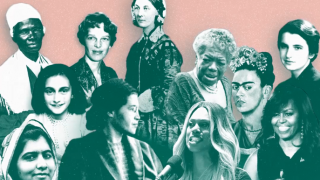
Origins of Women's History Month
subtitle:
Women’s History Month began as a grassroots initiative led by educators and activists who wanted to address the absence of women’s contributions in history education. What started as a local Women’s History Week in California grew into an internationally recognised month celebrating women’s achievements and their vital role in shaping history.
Learn more about it's origins and why it's still needed today.
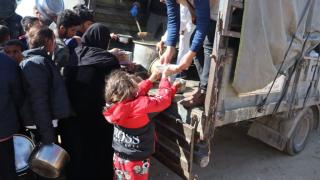
Our 2026 Crisis Watchlist highlights the emergencies where women’s needs are being overlooked, and where sustained, gender-focused support is urgently required. This list is by no means exhaustive, but offers an overview of where we're best placed to respond in the year ahead, given our size, geographical presence and expertise.

On 7th December 2025, Anat took on the Valencia Marathon, running 42 km not just as a personal challenge, but to raise vital funds for Women for Women International. In this blog, we explore how her journey of resilience determination can inspire us all to support women survivors of war.
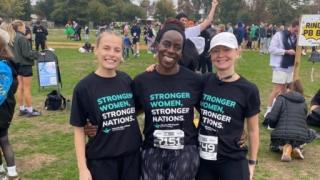
Throughout 2025, Centrica Women’s Network came together to host an inspiring series of events raising funds for Women for Women International. In this blog, we hear from Agata, who led the efforts, as she reflects on the power of women uniting and the spirit of sisterhood to drive meaningful change.
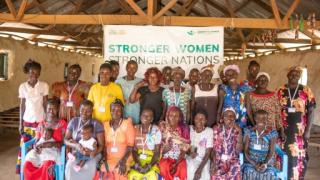
CRSV is not a by-product of conflict, it is a weapon. During this year’s 16 Days of Activism, we unpack the realities women face, from stigma to the absence of justice systems. Women for Women International continues to put survivors’ voices at the centre of advocacy and peacebuilding to challenge the systems that enable this violence and to champion women’s leadership in shaping safer futures.
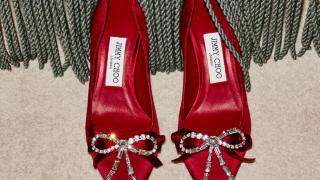
Shop with Purpose this Holiday Season
subtitle:
This holiday season, together with our partners we are inviting you to shop with purpose. From make-up and skincare to jewellery and fashion, find the perfect gift and help drive positive change for women worldwide, providing them with access to education, vocational training, and financial independence.