
Transforming Lives Together: Couples Connect in South Sudan
Transforming Lives Together: Couples Connect in South Sudan
Women for Women International is helping families transform their lives by fostering teamwork, financial independence and modern farming techniques - by piloting agricultural vocational training for couples
This innovative approach is part of our revised Men's Engagement Programme curriculum and encourages couples to work together, ensuring a better future for their families.
Here’s how the Couples Connect sessions are making a difference in Betty's life, and many others:
Betty's journey
moving forward after displacement
Displaced from her village during the 2016 crisis in South Sudan, Betty moved to the Ronyi Boma administrative division in Yei River County with her husband and their three children.
We lacked food, the children were constantly sick due to poor nutrition, and they often missed school.
To make ends meet, Betty borrowed money, sold firewood and opened a small restaurant. Farming, her true passion, was yielding little with her traditional methods due to the poor land conditions.
In March 2023, everything changed when Betty and joined our Stronger Women, Stronger Nations programme and participated in the pilot sessions for couples.
This pilot initiative aims to evaluate if couples' vocational training can lead to stronger economic outcomes for women compared to women-only vocational training. In addition to the standard agricultural training, which includes modern farming methods, the couples’ training has been adapted to:
- Educate men and women together on how to think about gender-sensitive divisions of labour
- Promote the equitable management of resources
- Foster gender awareness and an understanding how an agricultural family business operates
Each participant received a monthly stipend, a grant upon graduation to start-up their agricultural business, and farming tools and seeds.
Betty’s story is a testament to the pilot's positive outcomes for women:
With the new farming skills acquired, my husband and I embarked on joint farming.
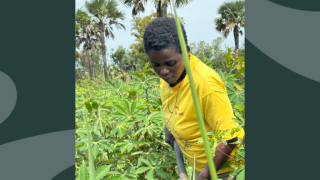
She continued, "He helped us get this large piece of land, and we applied all the new skills - from land preparation to harvesting and selling our products."
Today, my husband and I understand soil types, seasons and crop care. Our farm is thriving.
Betty's garden produce is sufficient to sustain her and her family, put her children through school and save for future needs.
She shared: "In my most recent harvest, I collected 4 basins of onions, 3 bags (50 kg) of peanuts, four basins of peas, and 4 bags of cassava. I am also now great at farm product business."
I would never have managed even half of this without the training and support from Women for Women International.
Changing Perspectives: A Husband’s Story
Engaging men in women's rights and power
For the men joining our Couples Connect vocational agricultural training, these sessions form part of a wider Men’s Engagement Programme curriculum, which is helping change patriarchal traditional norms and the perspectives of men in the community.
We spoke to Mawa, a programme participant, who joined our Couples Connect pilot sessions with his wife. He admitted that he had been a traditional, authoritarian husband, and that our programme helped him become a more supportive partner. As the training progressed, he began to appreciate his wife’s contributions and says he learnt the value of working together.
Today, my wife is the major breadwinner, and I support her in every way I can.
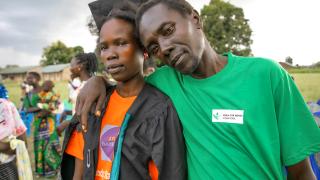
Mawa told us:
"In the programme, we learned about working together as a family, sharing responsibilities, communication in marriage, problem-solving and financial management.
Soon, I began to see reason in everything my wife was doing and I grew to appreciate her efforts in supporting me. Gradually, we started communicating again, and we would talk about business, farming and our family.
I started supporting her business, and we started working together."
Couples Connect Pilot: inital impact
more than training
The Couples Connect vocational training pilot, paired with our wider Stronger Women, Stronger Nations and Men's Engagement programming, appears to be leading to positive outcomes for couples in South Sudan.
We are in the process of conducting an internal evaluation that will be published later in the year to fully assess the success of the pilot approach. For the time being, this initiative is empowering couples to work together to:
- Enhance family unity: Couples learn to communicate effectively and share responsibilities, strengthening their family bonds.
- Promote financial independence: Participants gain financial management skills and receive grants to start or expand their businesses.
- Encourage modern farming techniques: Couples are trained in modern, practical farming methods to improve crop yields and food security.
- Foster community development: As families thrive, entire communities benefit from increased stability and economic growth.
Betty and Mawa’s stories highlight the impact of this new pilot in South Sudan.
Women for Women International is committed to engaging more couples in South Sudan and beyond. It is with thanks to our global community of supporters that this vital work is possible, helping families build a better future together.
-
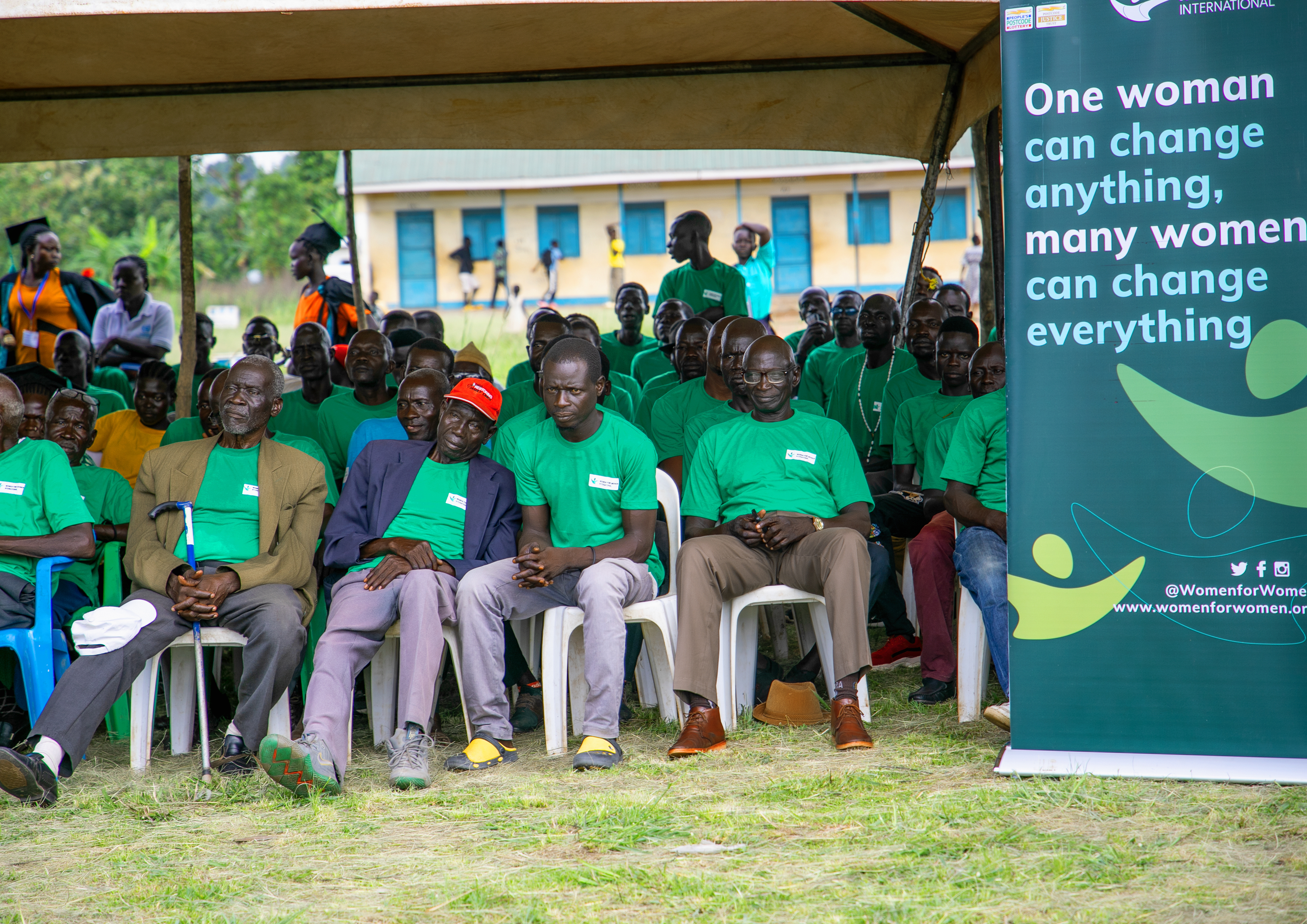
A group of men graduating the Men's Engagement Programme in South Sudan. Photo: Women for Women International -
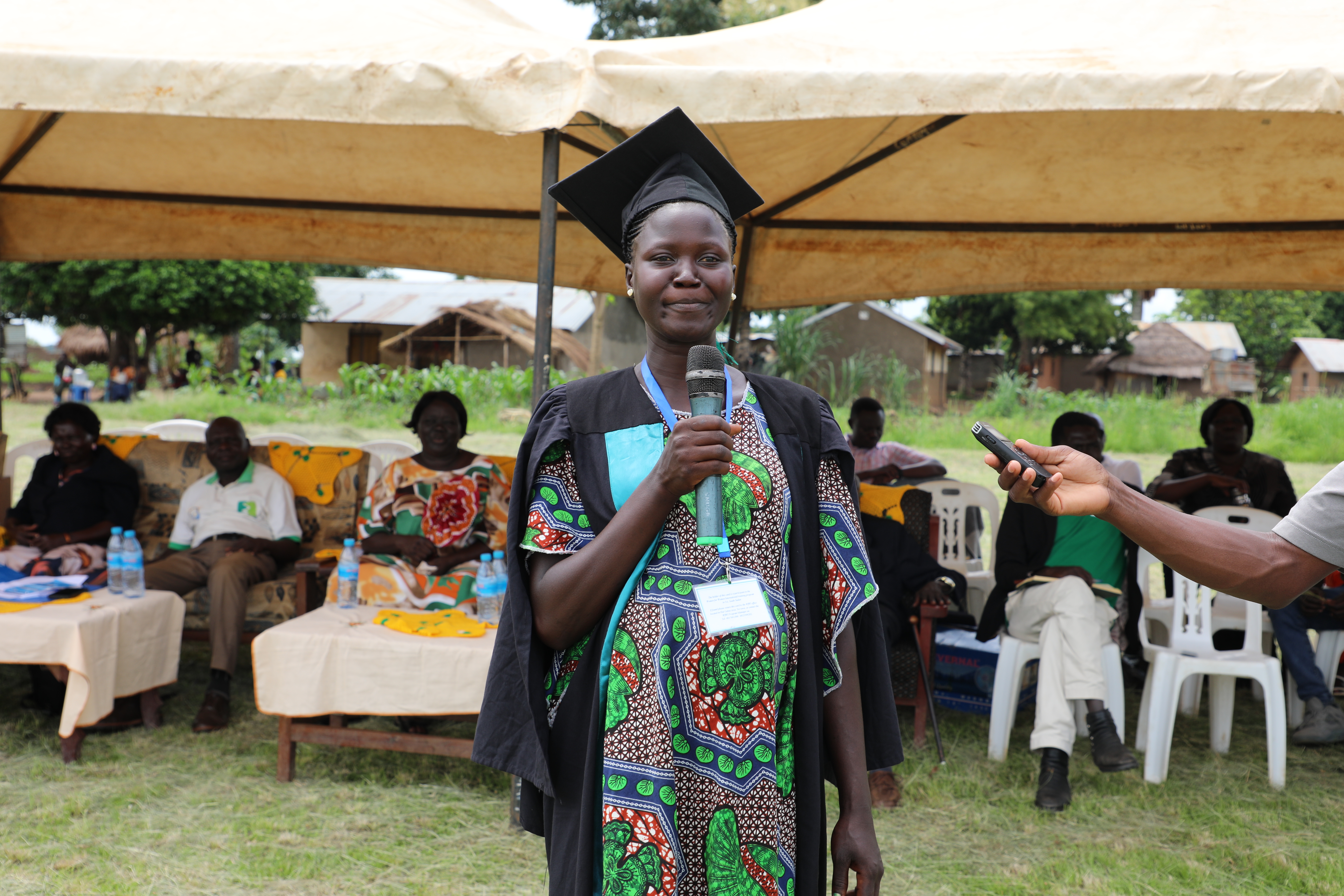
One of the women graduates of our Stronger Women, Stronger Nations programme addressing her fellow graduates, our team and other audience members at the graduation ceremony in South Sudan. Photo: Women for Women International -
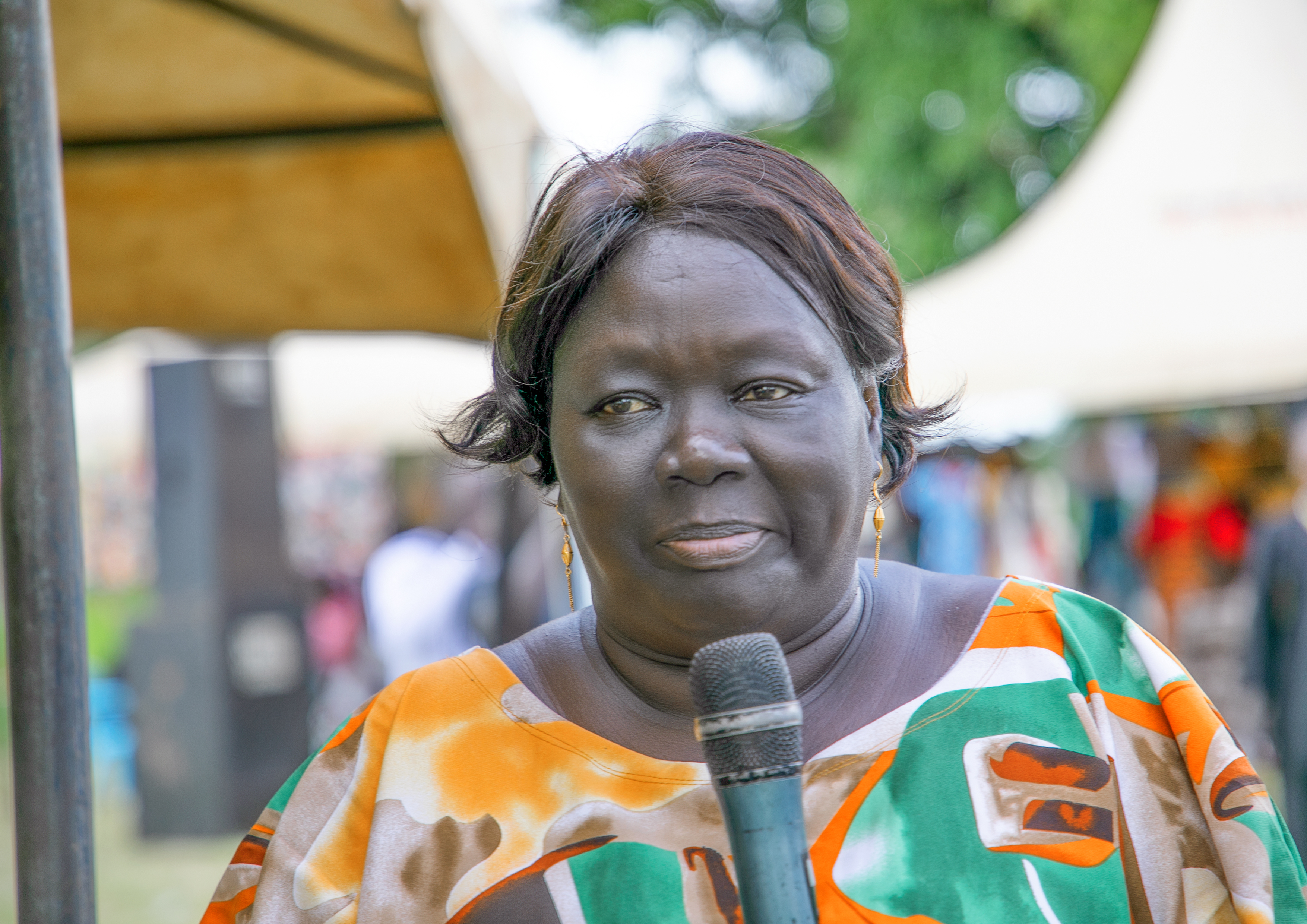
Marianne Kajokaya, Country Director of Women for Women International - South Sudan, proudly addressing programme graduates. Photo: Women for Women International



donate today
Help women survivors of war make a lasting difference in their lives, families and communities.
Give a gift today.
keep reading
In October 2025, students from over 30 schools across the UK, Mexico and Kenya came together for the Global Girl Leading Summit. Read about how our #PowerToChange workshop equipped more than 300 girls with the skills, confidence and solidarity to lead change in their communities.
Following her recent experience at the second Africa Climate Summit (and with COP30 about to launch in Brazil), Maryline Njoroge, our Global Policy and Advocacy Manager, shares her reflections on how gender equality continues to be sidelined from high-level policy on climate change action - and what we can do about it.
Poni Abraham is our Advocacy and Communication Coordinator in South Sudan. After being abducted, she has found renewed strength for her work with other women survivors of conflict and violence. She says, "this experience didn’t break my spirit – it rebuilt it. It reminded me why this work matters, why we can’t give up, even when the world feels cruel and uncertain". Read her story.

All women remember their teen years – some with joy, others with pain, and most with a hormonal tangle of both. When I think of my own adolescence, if I scroll back from the fever dream that is sixteen and fifteen and fourteen and land on that hopeful, fresh-faced moment that is being twelve years old, one of the first things I think of is Women for Women International.

Women for Women International is gravely alarmed by the UN Commission of Inquiry’s finding that Israel is committing genocide in Gaza - a determination that recognises what women and our partners in Palestine have been sharing with us for months. The Commission concluded that four of the five genocidal acts defined under the 1948 Genocide Convention have been carried out in Gaza - namely killing, causing serious bodily or mental harm, deliberately inflicting conditions of life calculated to bring about destruction, and imposing measures intended to prevent births.

How do you mourn for a loved one if you're still holding out hope that they might be alive? In this blog, hear from women facing ambiguous loss on how they've found courage in their community, even when closure never comes.

In July 2025, students at Seven Kings School hosted a powerful week of fundraising in support of Women for Women International. In this blog, we hear directly from Wania - the student leading the project - as she reflects on the importance of activism, sisterhood and what it means to create meaningful change.
In May 2025, Natalie bravely took on an 86-mile ultramarathon in support of Women for Women International. In this blog, we learn about the importance of sisterhood, determination and strength, and how these can inspire us to support the women we serve.
To mark International Day for the Elimination of Sexual Violence in Conflict, we are amplifying the voices of women who are not just enduring the harsh realities of war and displacement - but who are also working every day to protect, support and empower others. Hear from two women in Palestine.
At Women for Women International, we count a number of dedicated and compassionate male staff among our global community working towards a more equitable future. I spoke to several of our male colleagues – from Iraq and South Sudan, to DRC and the UK. I asked what allyship means to them, how their work has shaped their understanding of gender justice, and what they’ve learned from the women in their lives. What emerged was not just a collection of stories, but a testament to the quiet, determined work of transformation – both personal and societal.
Florence Dumba is a social empowerment trainer at Women for Women International in South Sudan. Her work, working with survivors and creating safe spaces for women to heal from their trauma, is grounded in her own experience of being abducted twice.
On March 28, 2025, a powerful 7.7-magnitude earthquake struck Myanmar, intensifying a crisis already marked by armed conflict, political instability, and widespread displacement. What was once a complex humanitarian emergency has now deepened into a compounded catastrophe - one that disproportionately affects women and girls. As infrastructure collapses and humanitarian access becomes even more restricted, the disaster has laid bare the urgent need for gender-sensitive responses in conflict-affected settings.