
Ebola: The DRC Outbreak and How We're Responding
Ebola: The DRC Outbreak and How We're Responding
A deadly strain of Ebola is spreading across the Democratic Republic of the Congo (DRC) and Uganda
With decades of experience serving women and their families in DRC, we are a trusted source of information and aid during times of crisis. Our teams are working fast to disseminate health information, meet urgent needs and save lives.
The Current Situation
In early May, a hospital in a rural part of northeastern DRC identified a cluster of severe illnesses affecting healthcare workers. Due to a combination of ongoing conflict, fragile health systems and widespread funding cuts to international aid, the process of identifying the illnesses as Ebola took weeks longer than usual.
Now, the World Health Organization has declared this a Public Health Emergency of International Concern, which is the highest level of global health alert.
The DRC is facing its 17th outbreak of Ebola, but this Bundibugyo strain – which has not been seen for more than a decade – is especially concerning because there is no vaccine to curb its spread.
Stopping this outbreak depends entirely on identifying cases fast, isolating people who are sick and strengthening hygiene practices.
In addition to a large cluster of infections in the northeast part of the country, the first cases have now been reported in Bukavu where our head office and training center is located.
We fear it will spread to our second location in Uvira soon.
We are mobilising our staff and participants in the DRC to respond to this crisis. Our past Ebola response in 2019 included teaching women how to identify Ebola symptoms, conducting community education on effective hygiene practices and distribute sanitation kits with gloves, water, chlorine and soap.
Added Risks for Women and Girls
As primary caretakers for their families and communities, women end up most exposed to Ebola infection. This time is no different:
In DRC, most cases to date have been in people between 20 and 39 years old, and two-thirds have been in female patients.
During previous Ebola outbreaks, pregnant women often couldn't get the care they needed due to overwhelmed health facilities. Pregnant women with Ebola are at an increased risk of adverse pregnancy outcomes, including fetal loss and pregnancy-associated hemorrhage.
And the risks go beyond direct infection. Women and girls are usually responsible for getting supplies and water – critical to cleaning and preventing the spread of the virus. They often take miles-long trips to water sources alone, making them vulnerable to rape and other gender-based violence. Rates of exploitation and domestic abuse rise during outbreaks.
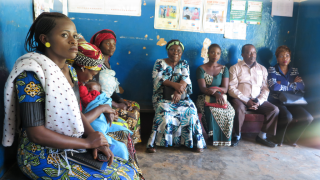
Strengthening and Preparing Communities
Women for Women International works at the critical intersection of women and conflict, and we are ready to prevent Ebola from reaching the women we serve – and make a life-saving difference should Ebola ever reach their doorsteps. We are an embedded part of the community. Our trainers come from the same communities they teach in. They share they the same backgrounds, culture and concerns.
With over 22 years of loyal service in DRC, the community trusts us, and this trust is key.
We have seen in past outbreaks that Ebola breeds distrust. It breaks down the connections that make communities resilient. Within the context of conflict, a distrust of outsiders and authority grows into a distrust of health workers who hope to help. Doubts about whether the outbreak is even real grow too. Outsiders receive blame for bringing the disease, and health responders are attacked. This leads to into distrust of anyone who could be touched by the disease, eroding social and economic structures.
We already meet regularly with women to teach them about health and hygiene, and so we are well-positioned to help our sisters invest in preparedness by sharing knowledge about the devastating effects of Ebola, how to prevent its spread and how to contain it.
Right now, we’re working closely with our team on the ground to understand exactly what they and their community need at this critical point. We are planning to train women on preventing Ebola and recognising symptoms to create an early warning system. As part of prevention, we are aiming to provide sanitation kits that include water, chlorine and soap, together with materials to detect high body temperatures.
Our past community education included teaching women to bump elbows instead of embrace, which became known as the "Ebola Bump." We also deployed vans with loudspeakers to disseminate health information on a wider scale.
We have a chance to curb this outbreak, but we cannot do it alone. This is a crucial time to come together, earn the trust of locals and support women as frontline educators.
Our Holistic Approach:
- Protect Women & Families: Provide hygiene kits to 2,700 women in our programmes with masks, gloves, soap, chlorine, spray bottles and pedal operated buckets
- Strengthen Frontline Response: Train and hire frontline health response staff in vulnerable communities
- Expand Community Protection: Supply PPE and install community-wide hygiene stations in Uvira and Bukavu
- Disseminate Accurate Information: Conduct community awareness campaigns via radio broadcasts, posters, theatre groups, public meetings and more
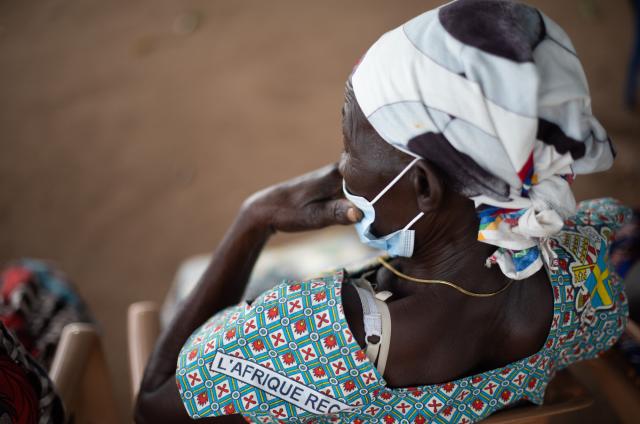
Help stop the spread
East Africa is facing a deadly Ebola outbreak. Your urgent gift will help our teams respond to this crisis DRC and other crises women are facing around the world.
Read more
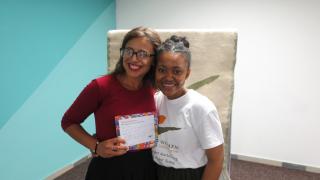
Hand Delivering My #MessageToMySister
subtitle:
Sylvia describes the impact of hand delivering a #MessageToMySister postcard to Fatima, a young woman from Bosnia and Herzegovina.
In the midst of the January blues, who doesn't need a quick boost to face the new year with refreshed energy and positivity? To get your dose of motivation, we've put together your most loved #MondayMotivation quotes shared by amazing supporters like you, influential women and the brave women survivors of war.
Brita Fernandez Schmidt, Women for Women International UK's Executive Director, shares her 3 top tips to include women in peacebuilding processes that she learned during her latest trip in Nigeria.
Zainab Gbobaniyi is a lawyer and advocacy trainer with Women for Women International. Here she tells us about her life-long passion for women's rights and how she's working to give marginalised women a voice.

The Ultimate Feminist Gift Guide
subtitle:
This year, we have rounded up the best gifts for the global sisterhood in our Feminist Gift Guide! Whether you’re buying for a special someone or looking to treat yourself, these gifts not only have the power to delight but will also make a real difference for women survivors of war.

Advent of Change Charity Advent Calendar
subtitle:
We are delighted to announce that Women for Women International is part of a unique advent calendar for Christmas 2019, alongside 23 other charities, which will appear in John Lewis & Partners stores across the country.
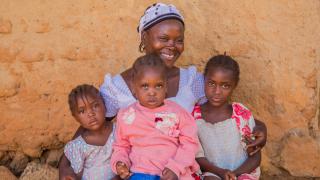
Today, on International Day of the Girl Child, and every day, Women for Women International strives to lift women to achieve their greatest potential both financially and socially so that they can lift their daughters in turn.

10 podcasts you should listen to
subtitle:
The team at Women for Women International has compiled a short list of some of the podcast recommendations from our staff and some podcasts that we’ve been featured in.
Last week, Heads of State and Government descended on New York to meet for the Sustainable Development Goals (SDGs) Summit, as part of the 74th session of the United Nations General Assembly. Along with members of our Global Advocacy Team, I travelled to New York to represent Women for Women International at the Summit.
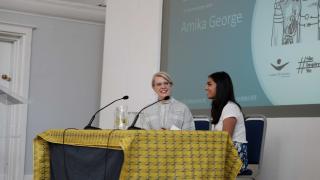
The Global Goals are so incredibly important in helping us to clearly identify the global challenges we face. We can all take one goal that resonates with us, and strive to tackle it in our own way, in our homes, schools, workplaces or communities.
Instead of bringing the peace these talks promised, President Trump’s sudden public condemnation and halt is leading to a surge in violence, threatening not only negotiations but the safety of the country’s women.
What does peace mean to you?
subtitle:
For women survivors of war, peace is not just an aspirational ideal, but a series of urgent, practical goals that they are working hard to make a reality.