
Period Poverty Doesn’t Stop for Conflicts
Period Poverty Doesn’t Stop for Conflicts
PERIOD POVERTY: THE INABILITY TO AFFORD AND ACCESS PERIOD PRODUCTS, SANITATION AND HYGIENE FACILITIES, AND/OR EDUCATION AND AWARENESS TO MANAGE MENSTRUAL HEALTH 🩸
More than two billion people around the world experience a period every month.
Among us, there is an unwritten but universal rule: whether you’re at school, the office or in the loo at your local pub, if someone needs an emergency pad or tampon, you hand one over – even to complete strangers.
Access to hygienic period products and safe spaces in which to use them is essential – as is our right to manage our periods without shame.
But around the world, around 500 million people cannot afford or do not have access to what they need each month.
A 2023 ActionAid poll revealed that here in the UK:
- More than one in five women and people who menstruate struggle to afford period products – up from 12% in just one year. This amounts to an estimated 2.8 million people.
- Of those affected by period poverty, 41% kept sanitary pads or tampons in for longer than they should and 8% re-used disposable pads, which can be dangerous. 37% said they had used tissues or cotton wool instead of proper products in the last 12 months and 13% had used socks or other clothing. 9% resorted to using paper or newspaper.
In the UK, government schemes, charitable organisations and other institutions help limit the impact of poverty. More than a quarter of ActionAid’s survey respondents said they were able to rely on period products available at school or work, but 17% said they stay at home. This means losing time at school, work or socially.
The situation for those living in conflict-affected countries is even more dire.
In times of crisis—like during war and conflict—existing healthcare systems and resources are put under additional stress. Period products, soap, clean water and access to safe toilets can be hard to come by, especially during displacement and in areas also affected by extreme poverty. We also know that the needs of women and girls are often overlooked during emergency water, sanitation and hygiene (WASH) programme strategising.
- One in ten girls in Sub-Saharan Africa misses school during their menstrual cycle.
- In Gaza, more than 540,000 women and girls of reproductive age lack access to items to support their hygiene, health and dignity, resorting to using cloth or sponges because they cannot access menstrual products.
- In Afghanistan, our team tells us that women living in refugee camps at the Pakistan border lack clean water and period products.
Period poverty is also perpetuated by stigma and shame, which encourages low levels of vital information and education, and increases discrimination. In some areas of the world, people on their period are deemed dirty or untouchable, restricting their movement and access to spaces.
Our recent consultation, “From Asking to Action”, saw Women for Women International local staff and partners speaking to 6,500 individual women in over 14 conflict-affected contexts who are not normally reached by either aid agencies or by consultation. We found that only 25% of women affected by conflict receive essential relief and recovery aid, with this figure plummeting to a mere 10% in Afghanistan. They called for increased, flexible and direct funding to local civil society and humanitarian organisations, including women-led organisations on the ground in conflict-affected countries who provide gender-sensitive life-saving assistance. 70% of the women we spoke to requested that support be more targeted towards women and girls, specifically asking that women and girls should be involved in the design and delivery of these efforts.
So, what can we do about it?
Women for Women International provides resources and training to help prevent and end period poverty
In humanitarian crises, Women for Women International distributes essential items, including kits containing menstrual products and soap.
In Palestine, for example, we have reached over 3,000 women and over 400 girls with critical items since violence in the region escalated in October 2023.
In Afghanistan, our local teams and partners have supported women and girls returning as refugees from Pakistan and in response to the Herat earthquakes.
Recently, our teams have launched a new vocational training option as part of our Stronger Women, Stronger Nations programme: learning to make their own safe and reusable period pads.
Watch this video to hear testimonials from women in our programmes.
Women for Women International also educates women about their health and wellness, with a focus on women's health. Grace, a Women for Women International Stronger Women, Stronger Nations programme graduate in Nigeria told us:
With the knowledge gained from the Stronger Women, Stronger Nations programme, I was selected for a two-week training on reusable menstrual pads.

Grace told us:
“I have always been concerned about how women and girls in my community manage their periods. Most of them use unhygienic materials like rags, leaves and even cow dung because they cannot afford disposable period pads. This practice exposes them to various health problems that are difficult to treat. Through the training, I have managed to educate them on the dangers of using these unhygienic materials and introduced them to reusable period pads made from healthy materials.
I am also teaching my two daughters how to produce the pads, and my eldest daughter, Christiana, who is in secondary school, uses the pads. She also educates the girls in her school on menstrual hygiene."
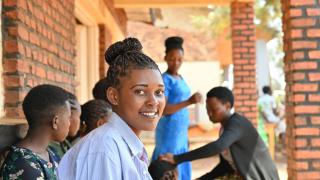
Educating people on menstrual management can be life-changing and life-saving. It reduces the risk of possibly fatal infections while also helping people stay in school or continue working while they are on their periods.
We recently launched our Adolescent Girls Programme – a 10-month programme aimed at teenage girls, adapted from our Stronger Women, Stronger Nations programme for women.
The curriculum includes a visit to a local health centre/a visit from a health worker to discuss services available to girls and to dispel myths related to their health, including sexual and reproductive health.
Women for Women International's work is also fighting period poverty through local partnerships. Child Bride Solidarity is one of our partner organisations in South Sudan, supported through our Resourcing Change project, which funds Women’s Rights Organisations across the globe. As part of their mission to strengthen the voice and leadership of women in peacebuilding, they are providing menstrual hygiene management and sexual and reproductive health training in schools and distributing menstrual pads to ensure access to necessary supplies and information.
Child Bride Solidarity also involve boys in these educational initiatives, reducing stigma by raising awareness about the naturalness of menstruation and addressing harmful social norms. They have seen a reduction in bullying behaviour by boys and increased participation of both genders in discussions about menstrual management. Their initiatives have also led to a decrease in girls’ absenteeism at school due to menstrual stigma, resulting in lower dropout rates and fewer school transfers.
We know that period poverty will persist for as long as periods are deemed dirty or shameful, and for as long as there is insufficient investment in gender-sensitive programmes. For the millions of people impacted each month, this limits their freedoms, endangers their health and reduces their life-long opportunities.
Period poverty is a global issue—made worse by war and conflict—but Women for Women International's work is proof that, together, we have the power to prevent it.
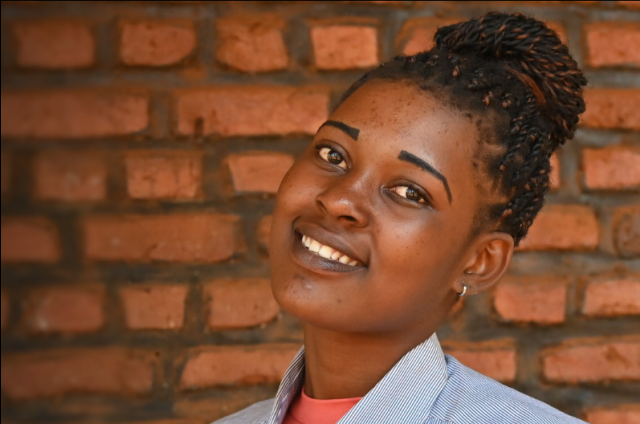
Provide menstrual hygiene products
500 million women and girls lack proper access to menstrual products. In crisis settings, it is one of the last priorities. Your donation today can provide essential menstrual hygiene products and education to women and girls who need it most.
Read more
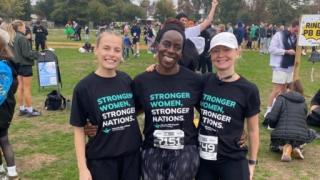
Throughout 2025, Centrica Women’s Network came together to host an inspiring series of events raising funds for Women for Women International. In this blog, we hear from Agata, who led the efforts, as she reflects on the power of women uniting and the spirit of sisterhood to drive meaningful change.
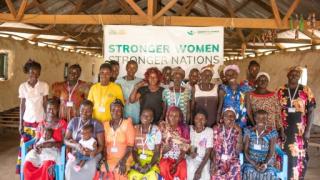
CRSV is not a by-product of conflict, it is a weapon. During this year’s 16 Days of Activism, we unpack the realities women face, from stigma to the absence of justice systems. Women for Women International continues to put survivors’ voices at the centre of advocacy and peacebuilding to challenge the systems that enable this violence and to champion women’s leadership in shaping safer futures.
Shop with Purpose this Holiday Season
subtitle:
This holiday season, together with our partners we are inviting you to shop with purpose. From make-up and skincare to jewellery and fashion, find the perfect gift and help drive positive change for women worldwide, providing them with access to education, vocational training, and financial independence.
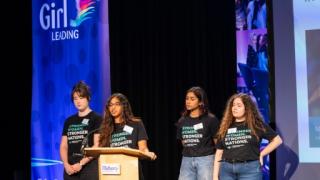
In October 2025, students from over 30 schools across the UK, Mexico and Kenya came together for the Global Girl Leading Summit. Read about how our #PowerToChange workshop equipped more than 300 girls with the skills, confidence and solidarity to lead change in their communities.
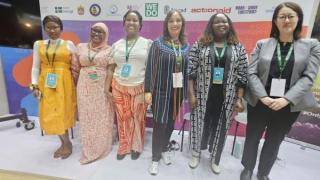
Following her recent experience at the second Africa Climate Summit (and with COP30 about to launch in Brazil), Maryline Njoroge, our Global Policy and Advocacy Manager, shares her reflections on how gender equality continues to be sidelined from high-level policy on climate change action - and what we can do about it.
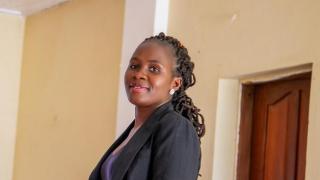
Poni Abraham is our Advocacy and Communication Coordinator in South Sudan. After being abducted, she has found renewed strength for her work with other women survivors of conflict and violence. She says, "this experience didn’t break my spirit – it rebuilt it. It reminded me why this work matters, why we can’t give up, even when the world feels cruel and uncertain". Read her story.

All women remember their teen years – some with joy, others with pain, and most with a hormonal tangle of both. When I think of my own adolescence, if I scroll back from the fever dream that is sixteen and fifteen and fourteen and land on that hopeful, fresh-faced moment that is being twelve years old, one of the first things I think of is Women for Women International.

Women for Women International is gravely alarmed by the UN Commission of Inquiry’s finding that Israel is committing genocide in Gaza - a determination that recognises what women and our partners in Palestine have been sharing with us for months. The Commission concluded that four of the five genocidal acts defined under the 1948 Genocide Convention have been carried out in Gaza - namely killing, causing serious bodily or mental harm, deliberately inflicting conditions of life calculated to bring about destruction, and imposing measures intended to prevent births.

How do you mourn for a loved one if you're still holding out hope that they might be alive? In this blog, hear from women facing ambiguous loss on how they've found courage in their community, even when closure never comes.

In July 2025, students at Seven Kings School hosted a powerful week of fundraising in support of Women for Women International. In this blog, we hear directly from Wania - the student leading the project - as she reflects on the importance of activism, sisterhood and what it means to create meaningful change.
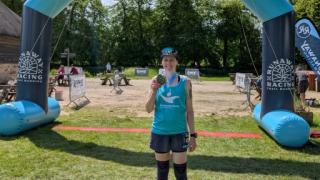
In May 2025, Natalie bravely took on an 86-mile ultramarathon in support of Women for Women International. In this blog, we learn about the importance of sisterhood, determination and strength, and how these can inspire us to support the women we serve.
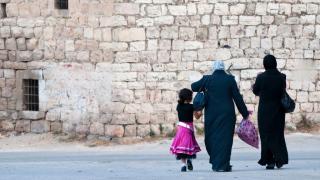
To mark International Day for the Elimination of Sexual Violence in Conflict, we are amplifying the voices of women who are not just enduring the harsh realities of war and displacement - but who are also working every day to protect, support and empower others. Hear from two women in Palestine.