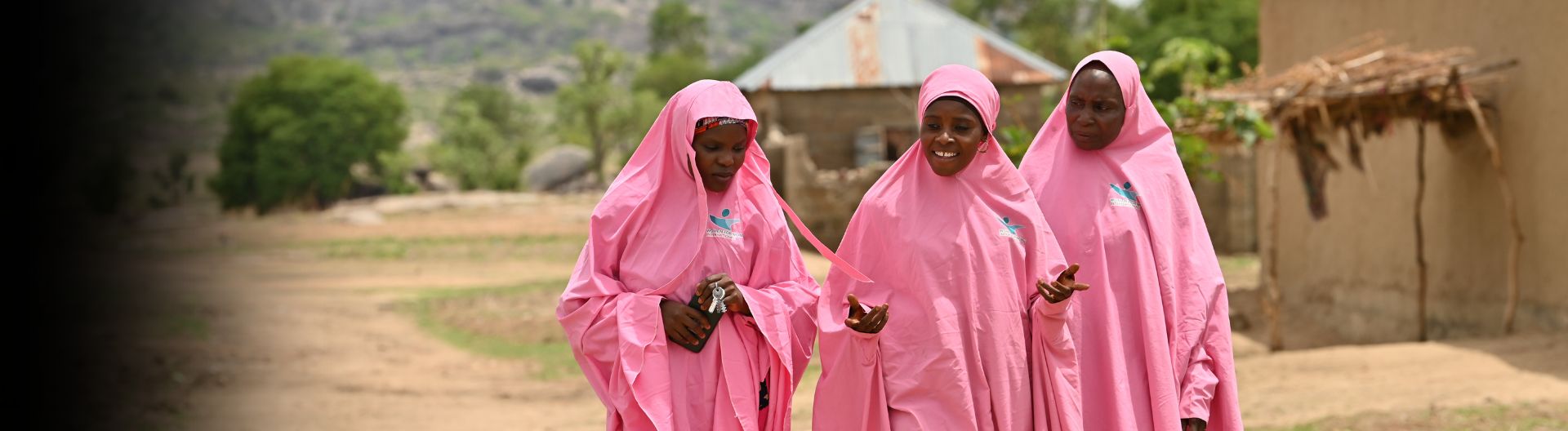
"From Asking to Action"
We spoke to over 6,500 women in countries affected by conflict who are leading change in their communities. Now it's time to ensure their priorities are amplified and actually heard by decision-makers.
From Asking to Action
From Asking to Action
A global consultation ensuring the voices of women affected by conflict are heard
Women affected by conflict are repeatedly denied their fundamental right to meaningfully participate in decision-making, advocate for their own self-identified priorities and drive forward solutions to the challenges they face. Efforts to include them in policy-making are too often tokenistic.
We need to be part of the solution. We know what we need better than anyone else.
Amid growing inequality, rising conflict and insecurity, and a mounting rollback on women’s rights, Women for Women International led an inclusive and participatory consultation process to ensure women affected by conflict are meaningfully involved in the global policy, peace and political processes and decisions that impact their lives, guided by the best practice principles outlined in our 'Beyond Consultations' tool.
6,500+
Number of women we reached via a combination of focus group discussions and surveys
54
Number of women's rights organisations that co-designed the consultation, led on the data collection and participated in key informant interviews
14+
Number of conflict-affected contexts where we conducted consultations
My message to leaders is to increase efforts to assist women affected by wars and ensure the spread of peace throughout the entire world.
New Resources:
In 2026, we released 13 detailed Country Snapshots, containing summaries and analyses of our quantitative and qualitative consultation findings, along with evidence-based policy recommendations organised by country and Women, Peace and Security pillar. The country snapshots are available in the interactive map on our dedicated microsite, and are listed below with their relevant translations.
-
Afghanistan: English (coming soon in Dari and Pashto)
-
Myanmar: English
-
Nigeria: English
-
Poland: English
-
South Sudan: English
-
Ukraine: English
With our support, Change Agents – women survivors of war who are trained in advocacy and leadership skills – and women’s rights organisations spearheaded the design and implementation of this consultation.
Women’s rights advocates and organisations defined the scope of the consultation, including identifying relevant questions and themes; fed into the design of the research tools; piloted their use to ensure they were fit for purpose; and have verified the preliminary findings and recommendations that have emerged.
In taking this consultative approach, this project – From Asking to Action – aims to ensure that the voices of women affected by conflict emerge loud and clear during this year of global milestones.
It also models women’s meaningful participation for decision-makers and leaders – demonstrating that consultation with women in conflict-affected contexts can and should be done – and provides a blueprint for others to build on.
Women’s rights advocates and organisations are truly key to achieving our collective peace, development and gender equality goals. These goals can only be met when women have the space, support and resources to utilise their leadership, expertise and insight; and when the voices of women leading change in their communities are amplified, heard and acted upon.
Explore our interactive site to:
- Learn more about the From Asking to Action project - what we did and why now
- Read about what ‘meaningful consultation’ means to us and the process we followed
- Meet our contributors and consultation co-designers – including Change Agents in Nigeria and women’s rights organisation partners in Afghanistan, Burkina Faso, Palestine, South Sudan and Syria – and find out more about their involvement in the project
- Explore our global consultation findings around the four pillars of the Women, Peace and Security agenda: Participation, Protection, Prevention and Relief and Recovery
- Dive into the country snapshots for all 14 countries to better understand the challenges faced by women survivors of war as well as their insights and proposed solutions
- Engage with the recommendations we’re making to ensure we move from asking to action.