
16 Days of Activism Against Gender-Based Violence: Understanding and Addressing Conflict-Related Sexual Violence
16 Days of Activism Against Gender-Based Violence: Understanding and Addressing Conflict-Related Sexual Violence
This year's 16 Days of Activism Against Gender-Based Violence campaign reminds us of the importance of global solidarity towards raising awareness and advocating against gender-based violence (GBV), including conflict-related sexual violence (CRSV).
Rates of GBV are often higher in conflict settings, and women survivors of such violence find few resources, services and support systems to provide them with the care and recourse they need. In fact, when women and girls need support the most, they instead find themselves isolated and discouraged from seeking help, which impedes their physical, emotional and psychological well-being.
Women for Women International recognises that, even as they face compounding challenges such as GBV, poverty and displacement, women in conflict are the pillars of support for their families and their communities. That is why, during this year’s 16 Days Campaign, we offer our support for these women by calling for accelerated action to prevent, respond to and help end all forms of GBV, especially in communities affected by conflict.
What is CRSV and Why Does it Matter?
Conflict-Related Sexual Violence (CRSV) has emerged as one of the most prevalent and destructive forms of violence in conflict zones around the world. CRSV refers to the use of sexual violence as a tool of war, intentionally utilised to undermine communities and enforce control. Even with the increasing recognition of CRSV as a severe human rights violation, the response to CRSV remains divided, with limited meaningful interventions to protect women and support their recovery.
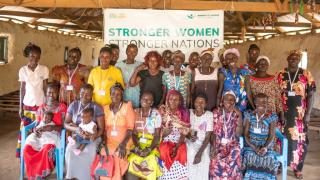
This is why campaigns such as the Global 16 Days of Activism to end gender-based violence are so important. They remind the global community that eliminating sexual violence requires solidarity and action grounded in justice, prevention and survivor-centred support.
CRSV is not just a result of conflict, but is instead a focused and destructive tactic that leaves survivors with both physical trauma and psychosocial scars. The UN Security Council Resolution 1325, which stresses women’s rights and roles in peace and security, marked a fundamental moment in worldwide recognition of CRSV as a severe violation. However, addressing CRSV is not straightforward, as it exists within complex cultural, political and social norms that often hinder effective action and prevent meaningful progress.
Key Barriers to Addressing GBV and CRSV
There are various barriers to addressing GBV rooted in both structural and cultural norms. Key findings from Women for Women International’s “From Asking to Action” global consultations, which included surveys, focus group discussions and interviews with over 6,500 women across the 14 conflict-affected countries where we implement programmes and support partnerships, found:
- Legal Barriers: In many conflict zones, women are unaware of their legal rights to participate in public life and seek justice for gender-based violence. Even when laws exist, they are not implemented effectively, and judicial systems often fail to support women’s rights.
- Cultural Norms: In some regions, social and cultural traditions restrict women’s mobility and freedom of expression, preventing them from seeking help or participating in peacebuilding efforts. As women in Afghanistan pointed out: "Women’s presence in public spaces in formal and informal meetings is seen as incompatible with traditional values."
- Economic Empowerment: As one Sudanese woman shared: "Economic areas to focus on to create jobs and vocational opportunities for women are in agriculture, animal husbandry, poultry farming, beekeeping, handicrafts and domestic product manufacturing." Without economic independence, women’s capacity to participate in advocacy or peacebuilding remains limited.
The Importance of Women’s Voices
Survivors’ voices are frequently left out of decision-making spaces meant to address the violence they endured. Research shows that when women participate meaningfully in peace processes, peace is more inclusive and durable. However, when it comes to responding to CRSV, policies normally fail to integrate survivors’ priorities: accountability, safety, economic recovery and long-term healing.
Women for Women International works directly with women survivors of conflict, including those affected by CRSV, through programmes that prioritise dignity, empowerment and leadership. Our ‘Putting Survivors at the Centre’ project supported women like Nsimire in the Democratic Republic of the Congo (DRC), who faced challenges in healing and accessing support after surviving CRSV, with referrals for psychosocial first aid and medical assistance through a local partner organisation.
In Women for Women International’s participatory research initiatives, such as From Asking to Action, we gather insights directly from women in conflict that demonstrate that survivors want more than protection - they want influence. They want to assist in designing programmes, shaping peace processes and ensuring justice mechanisms meet their real needs.
Voices from the Field: Impact of GBV and CRSV
From data collected through Women for Women International consultations across conflict-affected countries, women’s lived experiences offer powerful insights into the main drivers and damaging effects of CRSV and GBV.
The findings indicated that GBV affects women in all 14 countries where we conducted consultations, with 96% of women reporting that such violence impacts women in their communities. Intimate partner violence was by far the most highly reported form, selected by 72% of women globally. Women described experiencing other forms of violence, such as:
- Child marriage (49%)
- Psychological violence (47%)
- Forced marriage (43%)
- Denial of economic power (42%)
When asked whether women seek help in cases of GBV:
- 12% of women surveyed said that women in their community never seek help from formal security institutions such as police, legal aid or community welfare groups.
- 29% said women rarely do
- 21% said women often do
- 8% said women always do
When asked about why women are reluctant to seek help from security institutions in cases of assault:
- 19% of women surveyed cited social stigma
- 19% cited fear of retaliation
- 17% cited a lack of awareness of their rights
- 16% cited a lack of trust in institutions
As one woman from Afghanistan shared:
When we face violence, there are no judicial or legal institutions in Afghanistan that we can turn to for help. We either go to our parents to report the situation or, more often, we endure the abuse and return to our husband’s home.
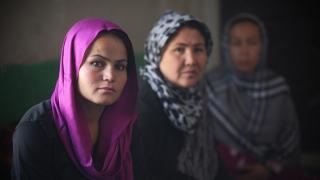
This sentiment was reiterated across our numerous consultations, where judicial inefficacy, lack of support networks and family barriers prevent women from seeking justice.
In countries where recent armed conflict has been marked by a high incidence of GBV and CRSV, such as Sudan and the DRC, displacement, poverty and cultural norms only exacerbate the issue, leaving women vulnerable to continued violence.
Conclusion
GBV and CRSV are not only matters of individual violence but a reflection of broader social, political and economic challenges that women face in conflict-affected settings. By listening to women’s voices, understanding their needs and providing them with the tools and spaces to lead and participate, we can begin to build a future where women are not only protected from violence but are active creators of peace. Women for Women International stands with survivors, amplifying their leadership and advocating for the structural changes needed to end the use of sexual violence as a weapon of war.
Real peace cannot exist while survivors are silenced.
Stand with women survivors of war
Support a woman survivor of war through our year-long Stronger Women, Stronger Nations programme. Your solidarity will help her use her voice, realise her power and rebuild her life.
Read More
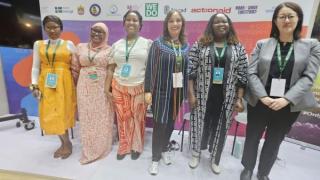
Following her recent experience at the second Africa Climate Summit (and with COP30 about to launch in Brazil), Maryline Njoroge, our Global Policy and Advocacy Manager, shares her reflections on how gender equality continues to be sidelined from high-level policy on climate change action - and what we can do about it.
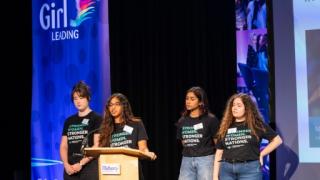
In October 2025, students from over 30 schools across the UK, Mexico and Kenya came together for the Global Girl Leading Summit. Read about how our #PowerToChange workshop equipped more than 300 girls with the skills, confidence and solidarity to lead change in their communities.

Poni Abraham is our Advocacy and Communication Coordinator in South Sudan. After being abducted, she has found renewed strength for her work with other women survivors of conflict and violence. She says, "this experience didn’t break my spirit – it rebuilt it. It reminded me why this work matters, why we can’t give up, even when the world feels cruel and uncertain". Read her story.