
Empowering Reads: A Journey Through Inspirational Books for Women and Girls
Reclaiming Their Stories: Celebrating the power of young women
Books to Inspire, Empower and Educate Adolecent Girls Worldwide
We are excited to announce the launch of Women for Women International's expanded Adolescent Girls Programme, an extension of our Stronger Women, Stronger Nations curriculum. This programme aims to support teenage girls aged 16-17 in conflict-affected countries, where they face extreme poverty, gender-based violence and limited educational opportunities. Globally, 119 million girls are not in school (source: UNICEF), highlighting the urgent need for intervention.
Our comprehensive curriculum covers gender equality, health, financial literacy, vocational skills, and future planning — designed to support young women and prepare them for economic independence. With a rights-based, survivor-centred approach, we ensure the safety and support of every participant.
Through our pilot programme in Rwanda and planned expansions to Iraq, Nigeria, and Afghanistan by the end of 2025, we aim to reach 3,000 girls.
In line with this mission, we've curated a selection of powerful books that resonate deeply with the themes of our Adolescent Girls Programme. These books connect to the rights of adolescents, addressing education, empowerment, resilience and activism. Happy reading!
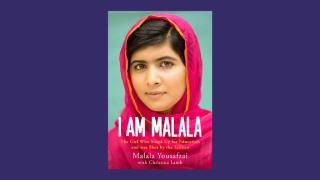
I Am Malala
Malala Yousafzai
Malala Yousafzai, the youngest-ever Nobel Prize laureate, is a global advocate for girls’ education. Her courageous stand against the Taliban’s oppressive policies has inspired millions, and her memoir tells the story of her incredible journey.
Why read it? I Am Malala: The Girl Who Stood Up for Education and Was Shot by the Taliban mirrors the challenges many adolescent girls face in our programme — the right to education which is often denied due to conflict and discrimination. Malala's story of resilience and activism serves as a reminder that education is key to empowerment.
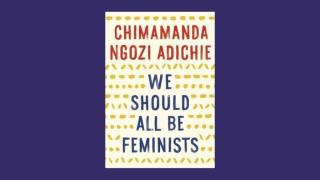
We Should All Be Feminists
Chimamanda Ngozi Adichie
Chimamanda Ngozi Adichie is a Nigerian author and feminist who has written widely about identity, gender and social issues. Her TEDx talk, which inspired this book, is a groundbreaking manifesto for gender equality.
Why read it? Adichie’s work aligns with our curriculum’s emphasis on gender equality and women’s rights. For teenage girls navigating a world that often marginalises them, her call for empowerment and inclusion is vital. With eloquence and passion, Adichie breaks down what feminism means today, making it accessible and relatable for people from all walks of life.
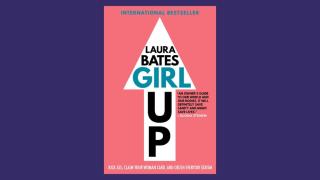
Girl Up
Laura Bates
Laura Bates is the founder of the Everyday Sexism Project, which has been a powerful platform for highlighting and addressing gender inequality.
Why read it? Packed with advice and inspiration, this book empowers young women to tackle sexism, build their confidence and assert their place in the world. Bates connects to the themes of our programme by encouraging young girls to challenge societal norms, build self-esteem and stand up against gender-based violence.
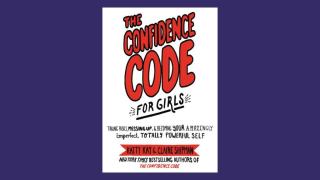
The Confidence Code for Girls
Katty Kay and Claire Shipman
Katty Kay is a journalist with BBC World News, and Claire Shipman is a journalist and advocate for women’s leadership. Together, they’ve written a book that aims to help girls break free from societal pressures and embrace their authentic selves.
Why read it? This book emphasises confidence and self-worth, key areas of focus in our Adolescent Girls Programme. By encouraging girls to take risks and embrace their unique strengths, it fosters the resilience and leadership skills our curriculum aims to build.
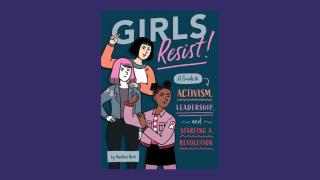
Girls Resist!
KaeLyn Rich
KaeLyn Rich is a writer and activist who works to promote social justice, particularly for youth and women.
Why read it? For young girls looking to make a difference, this book offers a step-by-step guide to activism, making it the perfect handbook for budding change-makers. Rich’s focus on activism mirrors our efforts to equip adolescent girls with leadership skills and the courage to advocate for their rights. This book is a powerful tool for those looking to effect change in their communities.
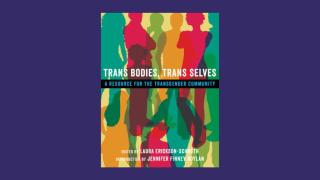
Trans Bodies, Trans Selves
Laura Erickson-Schroth
Laura Erickson-Schroth is a psychiatrist and transgender health advocate who focuses on promoting the well-being of transgender individuals.
Why read it? This invaluable resource tackles critical issues for the transgender community, providing education and support for individuals and allies alike. It aligns with our mission of creating safe spaces for all girls, regardless of gender identity.

The Girl Who Smiled Beads
Clemantine Wamariya
Clemantine Wamariya is a survivor of the 1994 Genocide Against the Tutsi in Rwanda and an advocate for displaced persons and refugees. Her memoir shares the story of her incredible personal journey.
Why read it? Clemantine’s story mirrors the experiences of many adolescent girls in our programme, who are often displaced by conflict and violence. Her story is a powerful testament to the strength it takes to overcome trauma and reclaim one’s future.
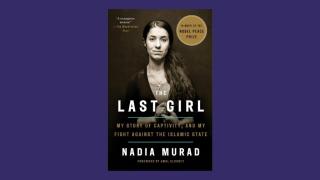
The Last Girl
Nadia Murad
Nadia Murad is a Yazidi human rights activist and Nobel Peace Prize laureate. She advocates for survivors of sexual violence and is a voice for the Yazidi community.
Why read it? Nadia’s story resonates deeply with the girls in our programme, many of whom are survivors of gender-based violence. Her activism and courage inspire young women to speak out and seek justice.
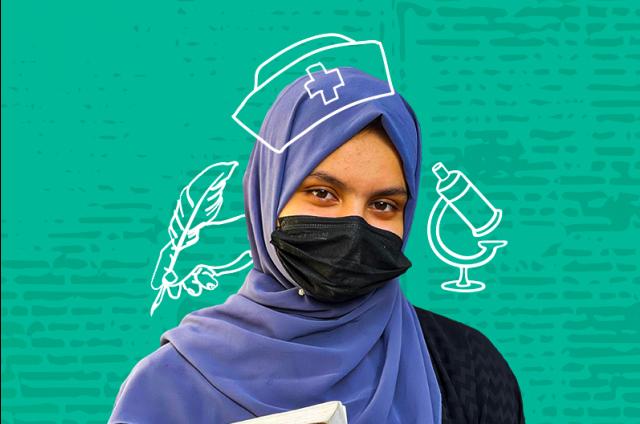
Help us enrol more girls in our Adolescent Girls Programme
With our #SheDares Matching Gift Challenge, every donation will be doubled, amplifying your impact. Join us in creating lasting change and helping young women reclaim their futures.
Read more
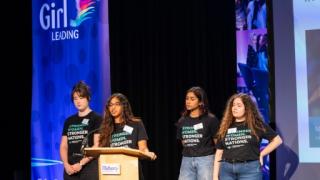
In October 2025, students from over 30 schools across the UK, Mexico and Kenya came together for the Global Girl Leading Summit. Read about how our #PowerToChange workshop equipped more than 300 girls with the skills, confidence and solidarity to lead change in their communities.
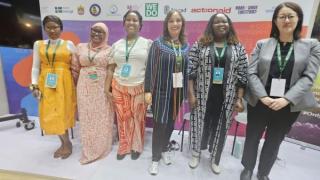
Following her recent experience at the second Africa Climate Summit (and with COP30 about to launch in Brazil), Maryline Njoroge, our Global Policy and Advocacy Manager, shares her reflections on how gender equality continues to be sidelined from high-level policy on climate change action - and what we can do about it.
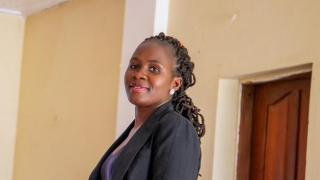
Poni Abraham is our Advocacy and Communication Coordinator in South Sudan. After being abducted, she has found renewed strength for her work with other women survivors of conflict and violence. She says, "this experience didn’t break my spirit – it rebuilt it. It reminded me why this work matters, why we can’t give up, even when the world feels cruel and uncertain". Read her story.

All women remember their teen years – some with joy, others with pain, and most with a hormonal tangle of both. When I think of my own adolescence, if I scroll back from the fever dream that is sixteen and fifteen and fourteen and land on that hopeful, fresh-faced moment that is being twelve years old, one of the first things I think of is Women for Women International.

Women for Women International is gravely alarmed by the UN Commission of Inquiry’s finding that Israel is committing genocide in Gaza - a determination that recognises what women and our partners in Palestine have been sharing with us for months. The Commission concluded that four of the five genocidal acts defined under the 1948 Genocide Convention have been carried out in Gaza - namely killing, causing serious bodily or mental harm, deliberately inflicting conditions of life calculated to bring about destruction, and imposing measures intended to prevent births.

How do you mourn for a loved one if you're still holding out hope that they might be alive? In this blog, hear from women facing ambiguous loss on how they've found courage in their community, even when closure never comes.

In July 2025, students at Seven Kings School hosted a powerful week of fundraising in support of Women for Women International. In this blog, we hear directly from Wania - the student leading the project - as she reflects on the importance of activism, sisterhood and what it means to create meaningful change.
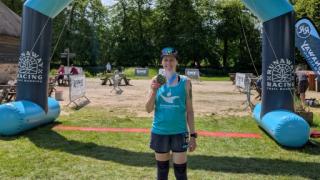
In May 2025, Natalie bravely took on an 86-mile ultramarathon in support of Women for Women International. In this blog, we learn about the importance of sisterhood, determination and strength, and how these can inspire us to support the women we serve.
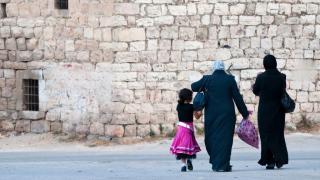
To mark International Day for the Elimination of Sexual Violence in Conflict, we are amplifying the voices of women who are not just enduring the harsh realities of war and displacement - but who are also working every day to protect, support and empower others. Hear from two women in Palestine.
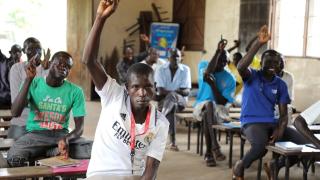
At Women for Women International, we count a number of dedicated and compassionate male staff among our global community working towards a more equitable future. I spoke to several of our male colleagues – from Iraq and South Sudan, to DRC and the UK. I asked what allyship means to them, how their work has shaped their understanding of gender justice, and what they’ve learned from the women in their lives. What emerged was not just a collection of stories, but a testament to the quiet, determined work of transformation – both personal and societal.
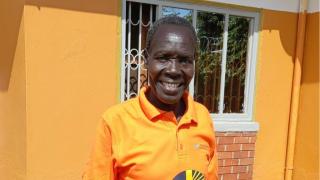
Florence Dumba is a social empowerment trainer at Women for Women International in South Sudan. Her work, working with survivors and creating safe spaces for women to heal from their trauma, is grounded in her own experience of being abducted twice.
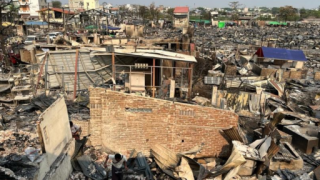
On March 28, 2025, a powerful 7.7-magnitude earthquake struck Myanmar, intensifying a crisis already marked by armed conflict, political instability, and widespread displacement. What was once a complex humanitarian emergency has now deepened into a compounded catastrophe - one that disproportionately affects women and girls. As infrastructure collapses and humanitarian access becomes even more restricted, the disaster has laid bare the urgent need for gender-sensitive responses in conflict-affected settings.