
Andy Burnham has built his political identity around hope, community power and devolution. What would it mean to apply those same principles to UK foreign policy?
Andy Burnham has built his political identity around hope, community power and devolution
What would it mean to apply those same principles to UK foreign policy?
Andy Burnham takes office as Prime Minister at a pivotal moment for both the UK and the wider international community. Around the world, commitments to gender equality are increasingly under threat. Conflicts are becoming more protracted, funding is diminishing, safe spaces are closing, and hard-won progress on women's rights is being rolled back.
Yet, at a time when hope can feel in short supply, we know that the solutions to many of these challenges already exist within communities themselves. Throughout his political career, Andy Burnham has argued that lasting change comes when local communities have greater power and influence over the decisions that impact their lives. He said in his first speech as Prime Minister: “We will take power out of here and carry it into every postcode in the land so that they can do more.” Trust the people closest to the challenges; invest in local leadership; build hope from the ground up. These principles shaped his approach to devolution and public service reform during his time as Mayor of Greater Manchester, and with the establishment of No. 10 North, there appears to be real momentum behind applying the same principles during his tenure as Prime Minister.
The question now is: if hope, trust and community power can transform lives at home, what could it mean to apply those same principles to the UK's engagement with conflict-affected communities around the world?
At Women for Women International, we see the power of this approach in our work every day. In countries like Palestine, Sudan, and the Democratic Republic of the Congo women are leading efforts to rebuild their communities, support their families, and create lasting change, often under extraordinarily difficult circumstances. Our experience reinforces something we have learned time and time again: the expertise, ideas and solutions needed to address many of today’s most pressing challenges already exist within communities themselves. Lasting change is most effective when it is shaped by those closest to the challenges. This principle is no less relevant internationally than it is in Greater Manchester.
Hope is central to this. As Prime Minister, Andy Burnham has committed to rebuilding hope across the UK. We see every day that hope is alive even among women living through conflict. Through our From Asking to Action global consultation, more than 80% of women told us they believe their situation will improve in the future, despite the immense challenges they face. Their optimism is remarkable – but hope alone cannot address these challenges. Hope must be matched by political leadership, sustained investment and a willingness to trust women as experts in their own lives and communities.
What would that look like in practice?
It would mean a UK that is prepared to lead with principle: standing consistently behind international law and the protection of civilians, investing in local leadership, and using its influence on the world stage to champion the rights of women and communities affected by conflict.
It would mean charting a different course in Palestine. As Palestinian communities continue to face violence, displacement and an erosion of their rights, the UK has both a moral responsibility and an opportunity to take a more principled approach. This means standing firmly behind international law, protecting civilians, supporting humanitarian access, and ensuring that Palestinians are able to exercise genuine agency over their futures. Their participation in humanitarian planning, recovery efforts and political processes should not be treated as an aspiration for a post-conflict future, but as an essential part of responding to the crisis today.
It would mean investing in locally led responses to crises such as the Ebola outbreak in the Democratic Republic of Congo. Across eastern DRC, local organisations, women peacebuilders and community leaders are already working to reduce tensions, mediate disputes, build trust across divided communities and prevent violence before it escalates. Rather than looking for solutions from outside, the UK should invest in the people already doing this work: supporting local mediation efforts, strengthening community-led peacebuilding initiatives, and ensuring local civil society organisations have meaningful influence over peace, recovery and prevention efforts.
It would mean recognising women human rights defenders as experts, leaders and partners in preventing conflict and building peace. Across conflict-affected countries, women human rights defenders are often among the first to identify emerging risks, respond to community needs and advocate for peaceful solutions, frequently at significant personal risk. Protecting them requires more than statements of solidarity. It requires sustained political backing, taking accountability for risk, flexible funding, meaningful protection mechanisms, and ensuring their expertise informs decision-making at local, national and international levels.
And it would mean staying the course: sustaining engagement in the crises that too often fade from international headlines. Hope cannot be built through short-term commitments alone. It grows when communities know they will be supported not only in moments of acute crisis, but through the long-term work of rebuilding, recovery and preventing future conflict.
Trusting communities means recognising that the knowledge, leadership and solutions needed to build lasting peace often already exist. The role of the UK is not to replace them, but to stand alongside them, invest in them, and help create the conditions in which they can succeed.
These conditions must include a clear pathway to returning to 0.7% of GNI. This is what a pathway to staying the course must look like: one where the ambition fuelling a narrative of hope is matched by a long-term strategy to address the significant resourcing gap that is contributing to the destabilisation of women's rights organisations around the world.
We know it is not a simple road ahead. But if community power is to be the defining principle of this Government, there is an opportunity to apply that consistently – not only at home, but internationally.
Women affected by conflict demonstrate extraordinary hope, resilience and leadership. Our collective responsibility is to ensure that hope is matched by action. Women have been clear about the futures they want to build for themselves and their communities – and what they need to do it. The question now is whether the international community – including the UK Government – is willing to match their ambition with sustained political commitment and investment.
Read more
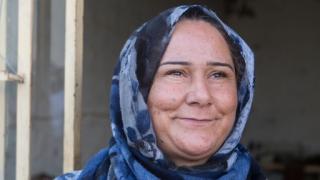
Displacement Is Reaching Record Levels
subtitle:
Displacement has reached unprecedented levels worldwide, with millions of people forced from their homes by conflict and crisis. Women and girls are often among the most affected, facing heightened risks and barriers as they try to rebuild their lives in uncertain and often unsafe conditions.
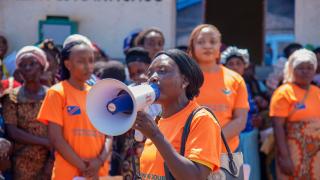
Women are deeply affected by conflict yet remain excluded from peace negotiations. This blog highlights why women’s leadership and inclusion are essential to building lasting, inclusive peace.
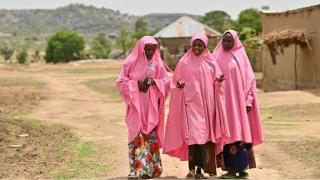
From Asking To Action
subtitle:
We spoke to over 6,500 women in countries affected by conflict who are leading change in their communities. Now it's time to ensure their priorities are amplified and actually heard by decision-makers.