
Joyce
My Name Is Joyce
I Left My Home with Nothing but Hope
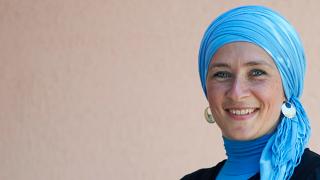
Joyce is 28 and lives in Hai Dilep, Yei River County, South Sudan, where she settled after being displaced due to conflict in her community. She works as a farmer and sells vegetables at the market, running a small business to help support her family of eight. According to the UNHCR, as of the end of June 2025, there were 67.8 million internally displaced people worldwide and 42.5 million refugees in total.
When conflict started in Mukaya [Joyce's community in South Sudan], everything in my community was different. Public services stopped working. Hospitals shut down, and giving birth became life-threatening. People died easily, and our animals were stolen. We were forced to leave. A soldier told me to go home, collect my things, stay quiet, and leave if I wanted to stay safe. Speaking up meant being shot.
I left in a hurry with my family and didn’t have time to take anything, since everything I owned was taken from me. My garden was ready to harvest, full of cassava, sweet potatoes, and ground nuts, but I had to leave it all behind.
I was only able to bring my mat, blanket, and saucepan. Other than that, all I had with me was hope.
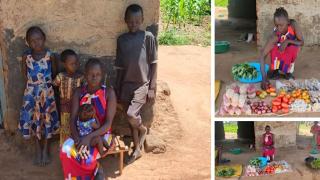
I fled with my four children and some neighbours. Around 100 of us left together, as the whole village was moving. Sadly, I got separated from my father-in-law because he was too old and weak to travel.
The rainy season was especially hard on me. My body ached all the time. Whenever it rained or armed groups got near, I had to hide in the bushes with the children to keep us safe. Carrying heavy loads on my head and a child on my back made the pain even worse. My ribs hurt, and the exhaustion, fear, and cold made everything harder.
When I was about to give birth, I was in a lot of pain, and the hospital was far away. With God’s help, I delivered my baby safely. When my child turned one, she became very sick, but there was no hospital nearby to help her. By the time I managed to get her to the hospital in Yei, it was too late, and she passed away. Losing her was so hard that I became depressed.
Since I moved to Yei, I feel safe. I do not hear gunshots anymore, and no one threatens me or tries to take my house. Now I can cook for my children without anyone coming near or trying to take our things.
We still face many challenges, and life is different here. Sometimes we have nothing to eat. Instead of growing food in my garden as I did before, I must buy everything from the market, but I don’t always have the money for it. Still, I am grateful that I can prepare food for my children without anyone taking it away. I remind my children not to dwell on what happened in our village, since they are now in a safe place.
In 2024, I joined the Women for Women International programme in Yei. I met 24 other women, and together we formed a class. Over the next 12 months, we learned practical skills like beauty, poultry keeping and tailoring. We also learned how to trade and start small businesses to support ourselves. As we went along, we discussed health, our rights as women, our right to own land and inherit property, and ways to prevent violence and domestic abuse. I like spending time with the other women during training. It means a lot to share our experiences, and it helps me feel more relaxed.
It makes me happy that I can still make mandazi, our local bread, and I haven’t lost my skill, even after so much time. My husband buys charcoal and food, and that makes me happy too. At the moment, my children are not in school. I hope that when I have a steady income, I can send them back so they can get an education.
I want to encourage everyone to choose peace. We should remember how much people, especially women, go through during wars.
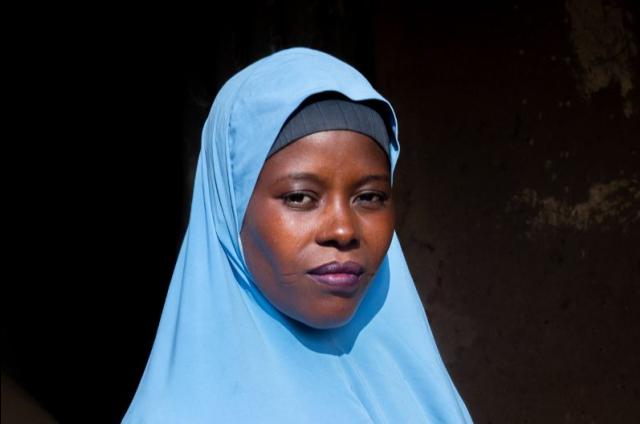
WHEN THE WORLD’S ATTENTION MOVES ON, WILL YOU STAND WITH HER?
Support a woman survivor of war through our year-long Stronger Women, Stronger Nations programme. Your solidarity will help her use her voice, realise her power and rebuild her life.
Read more
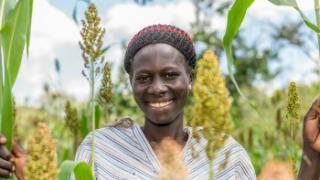
Our Work in South Sudan
subtitle:
Since 2006, Women for Women International - South Sudan has reached 28,388* women.
*As of the end of 2025.
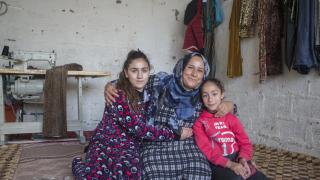
5 Facts About What Refugee Women Face
subtitle:
The amount of forcibly displaced people has reached a staggering number—over 114 million according to UNHCR—and the number only continues to increase. This World Refugee Day, learn about the state of refugees today.
Stories
subtitle:
Read the stories of the incredible women survivors of war that Women for Women International supports.