
8 Humanitarian Crises We Won't Overlook in 2026
8 Humanitarian Crises We Won't Overlook in 2026
Women for Women International Crisis Watchlist
Our 2026 Crisis Watchlist highlights the emergencies where women’s needs are being overlooked, and where sustained, gender-focused support is urgently required.
This list is by no means exhaustive, but offers an overview of where we're best placed to respond in the year ahead, given our size, geographical presence and expertise.
Afghanistan
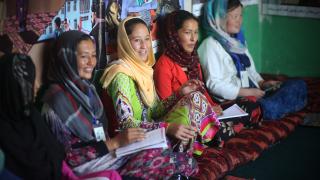
Afghanistan has faced decades of conflict and insecurity. After the de facto authorities took control in August 2021, most international funding was cut and the economy collapsed. Women are barred from most jobs, further straining households and the economy. Climate disasters like droughts and earthquakes have worsened food insecurity, with 12.6 million people facing crisis levels of hunger. Unable to attend university, cafes or even take a walk in the park, women and girls are desperate for spaces where they can be together, learn and grow.
How Women for Women International is responding:
Since 2002, we have operated in five provinces of Afghanistan, training 143,375 women and girls in their preferred vocation and how to save money – equipping them to be providers and decision-makers in their community. Despite many hurdles, we have continued our Stronger Women, Stronger Nations programme as well as emergency response in Herat and Torkham – providing shelter, clothing, hygiene kits, maternity care and mental health services to earthquake survivors and refugees returning from Pakistan.
The Democratic Republic of Congo (DRC)
The DRC has an extensive history of violence, brutal oppression by the colonial regime, and widespread violence amid the country’s struggle for independence. As of today, a record 8 million people are internally displaced as three foreign militaries and over 120 local armed groups compete for control of rare earth minerals. As healthcare and sanitation systems collapse, diseases like cholera, measles, and ebola are threatening conflict-weary communities. Women and girls suffer disproportionately from high rates of abuse and extreme poverty. Over the past few months, armed groups have threatened our programming in South Kivu.
How Women for Women International is responding:
Since 2004, our programming in DRC has trained women in both practical skills and social power. A core component of our training is access to Village Savings Loan Association (VSLAs) to generate income and save money. 98% of our DRC participants report saving a portion of their earnings by the time they graduate, compared to 23% at enrolment. We are continuing our Men’s Engagement Programme, which effectively curbs domestic violence and money control. And as violence comes closer to our doors, we have activated contingency plans for our teams and are conducting regular check-ins with our participants.
Myanmar
In August 2017, a deadly crackdown by Myanmar's army on Rohingya Muslims forced hundreds of thousands to flee across the border into Bangladesh. The harrowing accounts of rape, murder and mutilation shocked the world. In February 2021, the Myanmar military overthrew the democratically elected government, undoing a decade of progress and plunging the country into further chaos. Now, an estimated 9.7 million women and girls are in urgent humanitarian need and rates of child marriage have increased by 20% as families seek perceived protection and survival.
How Women for Women International is responding:
Through our Conflict Response Fund, we work with local partners to reach women and girls in Northern Rakhine State and neighbouring Cox’s Bazar, Bangladesh, where many Rohingya communities live. We provide literacy, numeracy, life skills and vocational training to help women and girls build resilience and economic opportunity. In the refugee camps of Cox’s Bazar, we are strengthening the capacity of local community teachers and running sessions for family members of adolescent girls, helping to shift deeply entrenched views of women’s roles and participation.
Palestine
Since October 2023, over 70,000 people in Gaza have been killed, 90% of the population has been displaced and the entire population of 2 million people is facing crisis-level hunger. Murders, domestic violence and economic turmoil are also on the rise in the West Bank, where Palestinians are living under a stifling blockade. Although the intensity of the conflict has decreased for now, the challenges are far from over. With Gaza's infrastructure destroyed and its healthcare system collapsed, the need for immediate and unrestricted humanitarian aid is just as urgent.
How Women for Women International is responding:
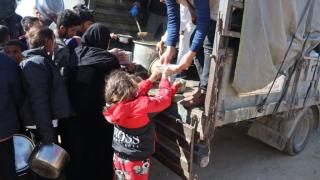
We are helping our partners in Gaza provide lifesaving food, warm clothing, blankets, baby nappies, hygiene kits and trauma-informed counselling. Together, we have helped evacuate families multiple times, built up tent encampments and kept a community kitchen operational for two years. In August of 2025, we launched our core Stronger Women, Stronger Nations programme in Hebron H2 area, one of the most militarised and legally complex areas in the West Bank. Adapted for life in an active war zone, the programme will train participants in vocational skills, health and wellness, rights awareness and peacebuilding.
Sudan
Since fighting broke out in April of 2023, more than 150,000 people have been killed and 19.2 million people have been displaced. Famine has gripped the country for over a year, and more than half the population needs life-saving aid, making it the largest humanitarian crisis on record. Death by starvation is a daily occurrence and the health system has collapsed. Civilians are subject to frequent attacks and women are being raped, sold into slavery and killed at alarming rates.
How Women for Women International is responding:
Through our local Conflict Response Fund partners in Sudan, we are meeting women’s most urgent needs like food, housing and healthcare. To help with the growing famine, our partners are delivering emergency food kits to displaced women and girls. In addition to training midwives and supporting mobile clinics, we are providing trauma counselling for survivors of gender-based violence, documenting cases of rape and conducting community prevention programmes.
South Sudan
The youngest country in the world, South Sudan's political stability has been marred by intercommunal hostility and violent clashes since its independence from Sudan in 2011. With the war raging in Sudan, over a million people have already fled into South Sudan. Essential food costs have quadrupled while jobs have vanished. For women and girls, the worsening climate and deforestation places an even greater risk on their safety they are regularly targeted for kidnapping and acts of violence by roving soldiers.
How Women for Women International is responding:

Women for Women International began operating in South Sudan in 2006, working with displaced women and survivors of sexual and physical violence. Through our Stronger Women, Stronger Nations programme, women choose and pursue different vocational tracks, including baking, sewing and harvesting crops. They strengthen their skills in earning and saving money to sustain their livelihoods. We also run our Change Agents and Men’s Engagement programmes in South Sudan too, to further women's rights and transform communities. We are providing additional security and trauma counselling to staff members, who themselves have been the target of recent abductions.
Syria
The 14-year-long civil war may have ended, but the humanitarian crisis in Syria is far from over. Years of conflict displaced 7.2 million Syrians and left 90% of the population living below the poverty line. The fall of the Assad regime leaves great uncertainty as refugees return home to a country without jobs, housing or stability. Electricity is only available an hour or two per day, while the water crisis means millions lack safe drinking water. Many women endured unimaginable sexual violence and unfair imprisonment during the war and now face rejection by their communities.
How Women for Women International is responding:
Since 2003, we've served Syrian refugees in Iraq with our holistic programming – helping women build skills, earn money and create new lives. Since 2020, we've partnered with Women Now for Development (WND) to provide vocational training inside Syria, on the outskirts of Idlib and the countryside around Aleppo. Since the fall of the Assad regime in 2024, we are working with WND to support women freed from the torture prisons, providing case management, cash support, safe shelter, medical care and trauma counselling.
Ukraine
Almost four years after Russia's full-scale invasion of Ukraine, more than 3.7 million people have been displaced internally and over 6.9 million have fled the country as refugees. Women and children constitute approximately 76% of the displaced and are at a heightened risk of gender-based violence, sexual exploitation and abuse. Throughout the war, sexual violence has been used as a weapon with extreme prevalence. Psychological trauma affects millions. Continued missile strikes are still causing widespread destruction, disrupted healthcare and critical shortages of food, shelter and heat as families face the long and harsh winter.
How Women for Women International is responding:
We launched an emergency response in 2022, working with partners on the ground. Currently, we’re supporting mobile medic teams to reach women survivors in areas of Ukraine that were formerly occupied by Russian forces. Staff offer comprehensive individual psychological assistance, group sessions, and medical treatment – particularly gynecological and reproductive healthcare. For women who find the courage to come forward, we also provide accompaniment during criminal investigations and trials related to sexual crimes.
Stand with women survivors of war
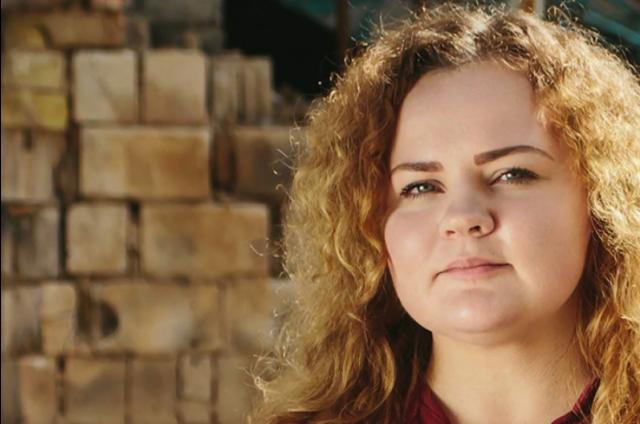
Support a woman survivor of war through our year-long Stronger Women, Stronger Nations programme. Your solidarity will help her use her voice, realise her power and rebuild her life.
Read More
Tahreer
subtitle:
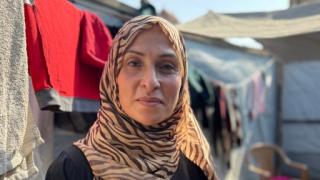
After losing her husband and son to the war in Gaza, Tahreer is striving to rebuild a life for her remaining children. Through psychosocial support sessions with Wefaq Association, supported by Women for Women International, she is finding small ways to cope, rebuild her confidence and nurture hope for her and her family's future.
Suzan
subtitle:
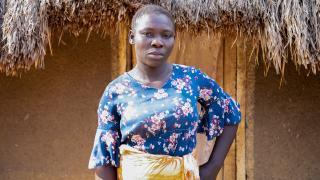
War has taken so much from Suzan – loved ones, financial security, stability – but she has always fought to protect her children. When her daughter became pregnant and faced forced marriage, Suzan dared to defy her family and communal pressures. And now, she helps others dare to do the same. This is her story.
Sohaila
subtitle:
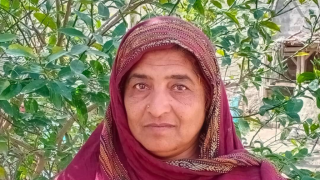
"Culturally, as a widow, it was expected of me to withdraw from public life and rely on the support of my extended family. However, I was determined to take a different path to provide for my children."
Read Sohaila's story of strength and defiance.