
Engaging Men to Build Stronger Families and Communities in Iraq
Engaging Men to Build Stronger Families and Communities in Iraq
Lasting progress toward gender equality, safer spaces and equal opportunities requires change not only in the lives of women and girls in conflict zones, but also in the attitudes and relationships that shape their daily experiences.
In Iraq, the Men’s Engagement Programme (MEP) works with men to strengthen their knowledge and practical skills in gender equality, human rights and violence prevention.
Most participants are husbands, partners or close male relatives of women enrolled in Women for Women International’s Stronger Women Stronger Nations programme. By working with women and men from the same households, the two programmes approach change from different but complementary directions. Women gain the knowledge, skills and resources to rebuild their lives, while men are encouraged to reflect on the beliefs, behaviours and power dynamics that may prevent women from exercising their rights and making decisions.
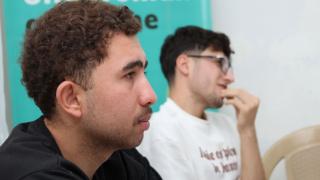
Currently delivered in Mosul and Hamdaniya in Nineveh Governorate, the MEP is designed as a participatory learning experience rather than a series of lectures. Facilitated discussions, group activities, scenario-based exercises, guided reflection and action planning give men space to speak openly about subjects that may otherwise be considered difficult or sensitive. Participants are encouraged to examine their own experiences and then identify practical ways to promote change in their families and communities.
Enrolment is voluntary and based on informed consent.
At the beginning of the programme, each participant signs an agreement covering attendance, respectful conduct, confidentiality and non-violence, helping to create a safe and accountable environment for everyone involved.
From Personal Reflection to Practical Change
The full curriculum comprises 18 modules, delivered through one mandatory and 17 complementary sessions. Participants attend one two-hour session each week, completing the curriculum over approximately five months.
The sessions address healthy relationships, respectful communication, gender equality and positive masculinity.
The sessions explore men’s physical and mental health, sexual and reproductive health, HIV and sexually transmitted infections, shared family responsibilities, household decision-making, community advocacy and community development initiatives.
For some participants, the learning begins with changes in how they communicate at home.
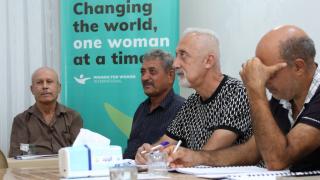
Zakaria Khalil’s experience illustrates how individual learning can translate into stronger family relationships. By reflecting on the programme’s themes and applying them in his daily life, he was able to strengthen his relationships within his family.
The training had helped me understand the importance of partnership within the family and encouraged me to use practical communication skills at home.
Bringing Couples into the Conversation
Couples Connect is one of four components that extend the programme beyond the core classroom sessions. It brings participants and their spouses together to discuss subjects including family planning, health, women’s rights and intimate partner violence. Through facilitated dialogue, reflection, scenario discussions and joint household planning, couples can consider how the programme ideas apply to their own lives.
In the 2023 cycle, 25 couples participated in Couples Connect. In the current cycle, 17 couples have taken part across six sessions. At the end of the 2023 cycle, 89% of participants reported a change in how household responsibilities were shared following these sessions.
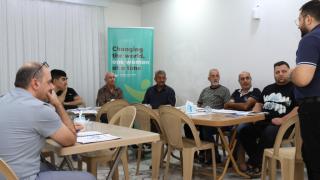
One of the participants attended a Couples Connect session with his wife after completing several Men’s Engagement Programme sessions. During the discussion, his wife described the changes she had noticed since he joined the programme:
He had become more willing to communicate openly, listen to my opinions and involve me in household financial planning and family decisions.
Working with couples is important because individual change can be strengthened when both partners have space to communicate, plan together and understand how equitable decision-making benefits the whole family.
Learning from Other Men
Peer Exchange sessions connect current participants with programme graduates and selected community leaders. Graduates share how they have applied what they learned, giving men who are still completing the programme an opportunity to hear directly about the challenges and possibilities involved in changing attitudes and behaviour.
A participant from the Iraqi Ninewa Media Center who attended a Peer Exchange session in Mosul was struck by seeing graduates return to engage with current participants. For him, their continued involvement demonstrated that the programme’s influence did not end with graduation. He explained: “I have noticed the quality of the discussions and the confidence with which men shared their experiences in safe spaces where men can discuss positive masculinity, family relationships and community wellbeing”.
Finding the Confidence to Lead
Hashim joined the programme hesitant to speak in front of others and generally preferred to listen during group discussions. Over time, however, he became increasingly confident in expressing his ideas, facilitating discussions and addressing an audience. Other participants also began to notice and comment on this change.
He later facilitated a discussion about family health during a Couples Connect session and presented a community initiative at the final Peer Exchange. Together with Ahmed, he moved from learning about change to taking an active role in encouraging it within the wider community.
For Hashim, the session on mental health was particularly influential. It helped him reflect on the fact that everyone experiences difficulties, but that what matters is how those difficulties are managed rather than allowing them to accumulate and affect family relationships or a person’s role in the community.
Experiences like Hashim’s show how greater self-awareness and confidence can enable participants to become advocates among their peers. Through the MEP Champions component, graduates can continue this journey by mentoring future participants, supporting community awareness activities and remaining involved after graduation.
Working with Trusted Community Figures
Change is more likely to take root when it is supported by people who are trusted and influential within their communities. The programme therefore engages male community and religious leaders, teachers, activists and other community figures. They receive training to promote gender-equitable norms, endorse the programme locally and assist with outreach and participant mobilisation.
During the current cycle, 37 community leaders and youth activists have participated in this training. This included 17 people who completed four days of training in Mosul and 20 who completed five days in Hamdaniya.
Evidence of Changing Attitudes and Relationships
Preliminary endline findings from the current programme cycle indicate encouraging changes:
-
71% of participants demonstrated highly equitable attitudes toward gender equality on the gender equitable men scale.
-
51% increased their knowledge of women’s rights.
-
44% reported an improvement in the quality of their relationship with their spouse.
Change that Reaches Beyond the Individual
Women for Women International’s work is centred on women and girls living in countries affected by conflict. But advancing women’s rights also requires engaging the men who influence decisions within households and communities. Without their participation, harmful expectations about masculinity, household authority and gender roles may continue to limit women’s opportunities and expose them to violence. Working with men strengthens the conditions in which women can exercise their rights, participate in decisions, earn an income and live free from violence.
It also gives men the opportunity to question harmful social expectations, improve their own wellbeing and build more supportive relationships with their spouses, children and communities.
In Mosul and Hamdaniya, participants are showing how this change can unfold:
Through a husband listening more closely to his wife, a couple planning together, a man finding the confidence to lead a discussion, graduates returning to guide their peers and community figures using their influence to support more equitable norms.
Each of these experiences form part of a broader effort to ensure that change is not carried by women alone, but is understood, supported and sustained by families and communities as a whole.
WHEN THE WORLD'S ATTENTION MOVES ON, WILL YOU STAND WITH HER?
Support a woman survivor of war – or a classroom of women – through our year-long Stronger Women, Stronger Nations programme. Your solidarity will help them use their voice, realise their power and rebuild their lives.
Read More
Since its launch by Meytal Radzinski in 2014, Women in Translation Month has championed women writers whose work crosses linguistic and cultural borders through translation.
This Women in Translation Month, discover books by women from countries affected by conflict with our reading list.
As Women for Women International marks 25 years in Nigeria, Bukola Onyishi, Country Director in Nigeria, reflects on the women whose resilience has inspired us, the communities we've partnered with and the progress we've achieved together.
Hanaa shares her experience living with a disability in Gaza. This blog sheds light on the realities facing women living with disabilities in Gaza, from barriers to healthcare and livelihoods to the long journey of recovery.