
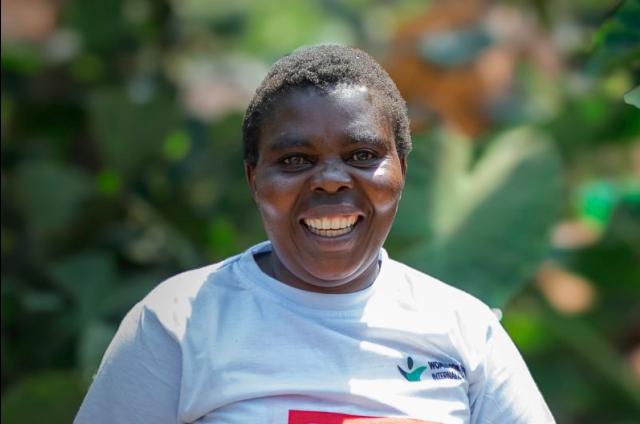
Faida's story
Faida
My name is Faida
Ebola changed everything, but not my determination
My name is Faida. I am 30 years old and the mother of three children: a boy and two girls. I live in Panzi, in Bukavu City, eastern Democratic Republic of the Congo.
When I was eight years old, my life changed completely. My parents separated, and my father remarried in Uvira. One day, he came and picked us up from my mother. On our way to Uvira, we were involved in an accident and taken to the hospital. My younger brother and I were severely injured and became disabled. When my father heard the news, he fainted and died instantly.
Many people only saw my disability before they saw me. They discriminated against me. They would not come near me or even help me up when I fell.
In 2025, when I heard that women were being enrolled in the Women for Women International programme, I worried that disabled women would not be accepted into the programme. I was afraid of people and avoided getting close to them. I saw myself as unworthy. But after joining Women for Women International's training, I began to accept myself. Others have accepted me too; they greeted me and that made me feel good.
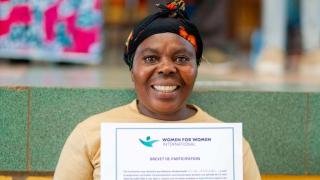
For the first time, I felt seen not for what I could not do but for what I could do. I learned how to make and sell soap, manage a small business, save money and take care of my children.
Unfortunately, with the outbreak of the Ebola disease, things have become even more challenging. The roads to the market have been blocked, people avoid crowded places and many stay indoors. For me, getting to the market is already difficult because of my disability and it has become almost impossible during this outbreak. I can no longer buy materials and supplies I need to make soap. Without supplies, my soap business has come to a standstill. Before Ebola I could go to the market to buy mangoes and guavas and bring them back to the village to sell, but I cannot do that anymore.
The women in my class and trainers have been my support system. We shared ideas and worries, encouraged one another and learned together. But because of the disease, we cannot meet as we used to. I miss the advice and the strength we gave each other. I live in fear all the time. We do not have enough food because we cannot go out, and I cannot even go to the hospital when I am sick.
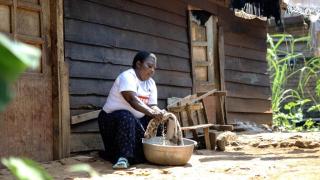
Being disabled has deepened the discrimination I face during this outbreak. When we are called to attend Ebola awareness sessions in our village, it is difficult for me to participate as a disabled person. Going to those gatherings is not easy and sometimes I stay home because I feel it is not safe. Some people look at me as if I were a burden, and I would not understand how to protect myself from Ebola. The outbreak did not just threaten my health; it reminded me of the barriers I have faced all my life.
Despite the many disabled people in our community, there is no door-to-door Ebola awareness outreach. The only information I have received on how to protect myself from Ebola has come from Women for Women International. We were advised to wash our hands regularly, keep our distance from others, avoid crowds and limit unnecessary movement. Women for Women International also gave us soap for handwashing and encouraged us to visit the hospital if we develop a fever.
Our hospital and the facilities being put in place, such as handwashing stations, are not disability-friendly. We need handwashing stations we can reach and health information we can access. Our community includes people with different kinds of disabilities. Some cannot move without assistance, and when they visit hospitals, they need someone to carry them or help them wash their hands. Because the hospitals are not accessible, people with disabilities may not receive help if no one is available to assist them.
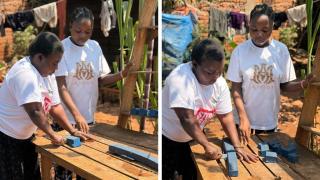
As I graduate from the Women for Women International programme, I think about the skills I have learned, one of them being soap making. It has become one of the most important tools in promoting hygiene and protection during this outbreak.
I still face challenges, but I see myself as a woman who refuses to let fear, disability and Ebola steal my future.
My hope for the future is that people like me will not be an afterthought during emergencies or community programmes. I also hope that things will go back to normal so I can continue making soap to earn income and take care of my children.
WHEN THE WORLD’S ATTENTION MOVES ON, WILL YOU STAND WITH HER?
Support a woman survivor of war through our year-long Stronger Women, Stronger Nations programme. Your solidarity will help her use her voice, realise her power and rebuild her life.
Read more stories
Angelique
subtitle:
Many women in the Democratic Republic of the Congo don't own their own land - even though most farmworkers are women and despite laws in place to protect their right to it. Read about how Angelique's journey through out programme led her to become a Change Agent and persuading a skeptical community that she had just as much right to own land as her husband.

Shireen
subtitle:
Unable to find work as a refugee, Shireen desperately wanted to learn a new skill that could help her provide for her family. Shireen learnt how to sew, but she gained more than the ability to make clothes: she learnt about her worth and value as a woman.
Dada
subtitle:
Dada was forced to flee her home when Boko Haram threatened to kill her husband. Now she is a successful businesswoman and a leader in her community.