
What Being Abducted in South Sudan Taught Me About Courage and Connection
What Being Abducted in South Sudan Taught Me About Courage and Connection
My name is Poni and I am the Advocacy and Communication Coordinator for Women for Women International in South Sudan.
It’s late afternoon, and I’ve been running for hours through the forest, mud clinging to my boots, sweat mixing with rain. I don’t know where I am. I don’t know if I’ll survive. The men who took us have made their threats clear.
I’m exhausted. I think about my mother, my two young children. I try not to picture their faces – but I do. I can’t help it.
I never thought this would be how my life might end.
Earlier that morning, something told me not to get in the car. But I brushed it off. I work for Women for Women International, a nonprofit that supports women survivors of war.
I’ve told dozens of stories about the women we serve – stories of strength, of violence, of unimaginable resilience. But I never imagined I’d live one of those stories myself.
We were driving out of Yei, South Sudan, heading toward our training centre, when we saw armed men in military raincoats. We assumed it was a checkpoint. But then more men appeared, surrounding our vehicle, signaling us to turn off the road. That’s when I knew something was terribly wrong.
They ordered us out of the car. “Don’t try to hide anything,” they warned. We obeyed. They took what little we had, and forced us to walk with them into the forest.
Hours passed. We were exhausted, frightened, uncertain what would happen next. At one point, they separated part of our group. I remember feeling a deep ache in my chest as I watched my colleagues disappear into the trees.
The rest of us were led deeper into the forest. Every time we stumbled, they struck us. Eventually, we reached a new hideout. The air was thick and silent except for the sound of rain hitting the leaves. I could feel the weight of the day pressing down on me.
At some point, I stopped fighting the fear. I lay down on the cold, muddy forest floor, wrapped in my jacket, and fell asleep.
When I woke up, something had changed. The men were talking quietly, their tone less harsh. Then, suddenly, they told us to leave. I didn’t believe them at first. But we walked, step by step, out of that forest. No sounds. No gunfire. Just silence. We were free.
Hours later, after flagging down a passing vehicle, we made it back to Yei. Alive.
But freedom didn’t bring peace. In the days that followed, I was consumed by anger – anger at how close I came to not surviving, and at how often this happens in South Sudan. I asked myself: Is this job worth my life? My family begged me to quit.
But something inside me had changed.
For years, I’ve listened to women share their stories of survival –stories of violence, of loss, of finding hope again. I thought I understood them. I thought empathy was enough. But after what happened, I realised there’s a difference between understanding and knowing.
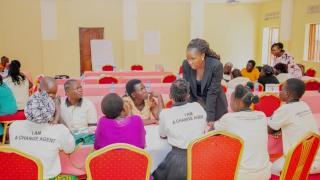
I now know what it feels like to lose control, to face real fear, and to cling to faith when you have nothing else. And in that knowing, I’ve found a deeper connection to the women I work with.
Their courage has always inspired me. Now, it strengthens me too.
This experience didn’t break my spirit – it rebuilt it. It reminded me why this work matters, why we can’t give up, even when the world feels cruel and uncertain.
I’ve made my choice: I will not walk away.
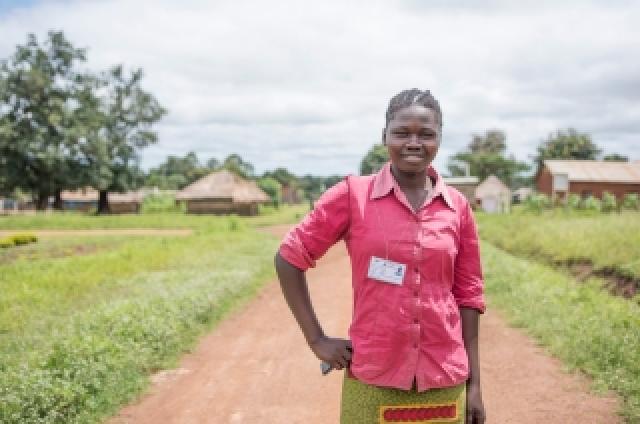
Stand with women survivors of war
Support a woman survivor of war through our year-long Stronger Women, Stronger Nations programme. Your solidarity will help her use her voice, realise her power and rebuild her life.
Read more
Read about how Dr. Asma Elnaeem and Dr. Hiba Ahmed are providing vital healthcare and support to women in Sudan amidst the ongoing conflict, showing incredible resilience despite immense challenges.
Bukola Onyishi, our Country Director in Nigeria, shares how gratuates of our year-long programme have taken the initiative to pass along their learnings to 475 women from diverse religious and ethnic backgrounds. Bukola says "Their commitment to sharing knowledge and fostering resilience has been nothing short of inspiring to me."
Each week, these trainers—graduates from our programme—brought the women together to teach them social and economic skills using participant handbooks, ensuring that the lessons they once received from Women for Women International continue to reach more women.