
Miracle's story
Miracle's story
Once denied the chance to continue her education, Miracle gained the skills, confidence and hope through our Adolescent Girls Programme and started to shape her own future
My name is Miracle, and I am 17 years old, and I am the youngest of six children, from Nigeria. Like most families in my community, we survive mainly through farming, which is our way of life. My parents cultivate maize, soybeans, Irish potatoes, sweet potatoes, millet and guinea corn, most of which are consumed at home. To supplement our income, my mother also sells staple food items at the Monday market in our community, and this helps to sustain us in difficult times. In my free time, I enjoy cooking, reading, listening to music and spending time with friends, but beneath these interests, I carried a heavy burden in my heart for a long time.
After completing secondary school, my dreams of continuing school came to a painful halt. My parents could not afford to pay my examination fees of the last year, and I had no choice but to drop out. It was one of the most heartbreaking moments of my life.
I remember crying and asking myself repeatedly, “What will become of me?”.
I tried to console myself, but it felt like my future was slipping away before my eyes. I spent my days at home, doing house chores and going to the farm with my parents, convinced that my life would end up like that of many other girls my age; married off early, pregnant and stuck in a cycle.

One day on our way to the farm, everything changed. My parents and I met my aunt, and she told us about an opportunity for girls aged 16–17 through a programme by Women for Women International, the Adolescent Girls Programme. She had heard the announcement in church and immediately thought of me. She said, “Miracle, this may be the chance you’ve been waiting for, so go now!”. I quickly rushed home, washed my feet, changed my clothes and hurried to the venue. My heart was pounding because I didn’t know what awaited me. When I arrived, I saw some girls being turned away because they did not meet the criteria, and I feared the same would happen to me. But when it was my turn, I was screened and asked to sit down with the others.
At that moment, I breathed deeply, whispered a prayer of gratefulness, and knew that a new chapter of my life had just begun.
When the programme started in November 2024, I assumed it would be basic literacy training, perhaps just learning alphabets and numbers, but to my surprise, it was far more than that. From the very first session, my mind was opened to a world I had never known. One of the most powerful lessons for me was the topic “What Makes Me a Girl.”
For the first time in my life, I understood that my worth as a girl is not less than that of a boy.
I realised that gender roles are shaped by culture and society, and if we allow them, they can hold us back. After that session, I had the courage to talk to my mother about sharing household chores more equally, and soon after, my 14-year-old nephew also started sweeping, washing dishes and fetching water; tasks that had always been reserved for us the girls. This simple change gave me a sense of pride and showed me that I had a voice that mattered.
Before joining the programme, I did not pay much attention to personal hygiene, especially during menstruation. However, the health and hygiene sessions completely changed my mindset. I learned the importance of good menstrual hygiene and now I bath twice daily, change my sanitary pads regularly and wear clean clothes. I also brush my teeth consistently and feel more confident in myself. In addition, I discovered the importance of eating a balanced diet, particularly as an adolescent girl who needs enough iron to make up for the blood lost during menstruation. I began encouraging my family to include more vegetables in our meals. Today, I prepare dishes with spinach, cabbage and spring onions, and my parents enjoy them.

The joint sessions with parents also transformed my relationship with my mother. Before the programme, I never imagined that I could sit with her to laugh, share jokes or even open up about my personal struggles. Today, we talk like friends, and I feel more loved and supported than ever before. My parents also encourage me to attend every training session on time because they have seen the changes in me firsthand.
Through the business skills training, I gained knowledge in budgeting, saving and managing money. In the past, I would spend every coin I got without thinking about tomorrow, but today I save with my Village Savings and Loan Association. Beyond that, I have used my baking skills to start making cookies and soft buns, which my younger cousin sells in school. With the income, I am learning how to sustain myself and contribute to my family. I also invested in tailoring skills with part of my stipend, while my parents covered the rest.
These skills make me feel secure because I know that no matter what happens, I have the ability to work and earn for myself.
Now that I have graduated from the programme, looking ahead, my biggest dream is to return to school, complete my education, and sit for my national examinations. I hope to study law in the future so that I can fight for the rights of marginalised women and give a voice to those who are often silenced.
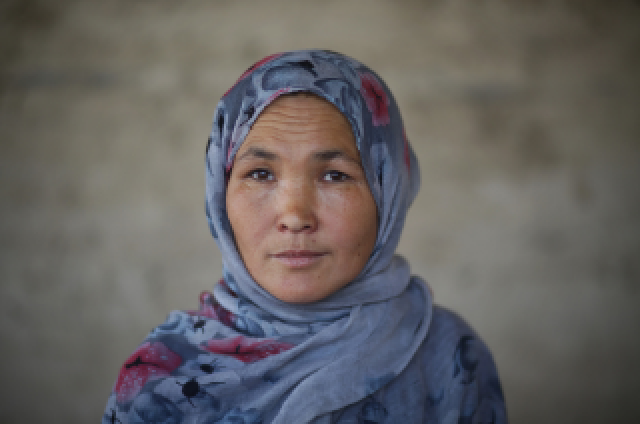
WHEN THE WORLD’S ATTENTION MOVES ON, WILL YOU STAND WITH HER?
Support a woman survivor of war through our year-long Stronger Women, Stronger Nations programme. Your solidarity will help her use her voice, realise her power and rebuild her life.
Read more stories
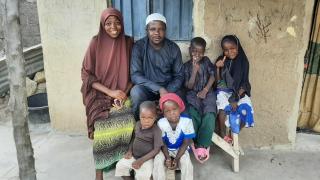
Ikilima
subtitle:
"My friend told me about the programme and said that I would be helped to repair the strained relationship in my family, and I would be taught how to negotiate with him so that we could have discussions as husband and wife."
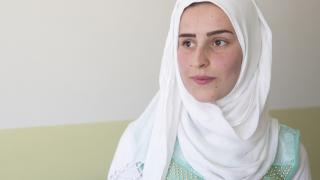
Faizah
subtitle:
Faizah has always been brave – even aged 13, when her uncles tried to force her into marriage. So, when ISIS attacked her community and warned her not to flee, she harnessed that defiance and dared to find safety. Faizah dreams of a world without war; of peace for her children. Here is her story.
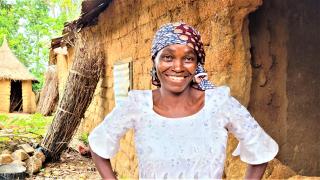
Grace
subtitle:
"I am very proud of myself for achieving all of this, my confidence is at an all-time high right now, and I feel like I can take on the world if the need arises."