
Muzna's story
My name is Muzna, and I refuse to let Syria forget its women survivors
Why should a man experience the freedom of this new Syria one way and yet a woman is marked for life with the stigma of detention
It has been one year since the Assad regime was toppled. Yet, for many of Syria’s women, the fall of a dictator has not meant the rise of freedom and equality yet.
Women were detained, and tortured by Assad’s brutal security apparatus, for no reason, just like men. When the revolutionary fighters freed thousands of people from the regime’s prisons, male detainees were feted as national heroes. For women, it’s been a different story.
Whenever a woman was released from detention, the first question people ask her is not “How are you?” —but instead, “Did anyone touch you? Were you sexually abused?” In many of our communities, there is such shame and stigma associated with women survivors of sexual violence — that it provokes extreme reactions - and compounds the trauma for former detainees.
I know families who refused to take women survivors back after their release from detention — and others who did take them in but placed them under house arrest.
Not a single survivor we have met said that anyone had asked her, “How are you now?” But we do. We ask this.
Women Now for Development has been working in Syria for years, alongside our partners Women for Women International who have stood by us, in times of success and joy, sorrow and crisis.
Together we have supported hundreds of women survivors of detention and continue to support them today.
After years in hiding, it is good to be able to work out in the open at our centres in Idlib and Damascus.
Through our partnership with Women for Women International, we are helping survivors rebuild their lives after unimaginable trauma — offering psycho-social support, economic skills and training and safe spaces for healing.
In the new Syria that we are all building together, I truly hope that our society will get rid of the concept of stigma — a concept that is neither moral nor legitimate.
I also hope that, with the new government, women survivors of the former regime’s cruelty will be given opportunities, jobs and spaces that belong to them. They should be able to take part actively in society, so that they — along with all Syrian people, in all their diversity — can enjoy human rights and live with dignity and safety.
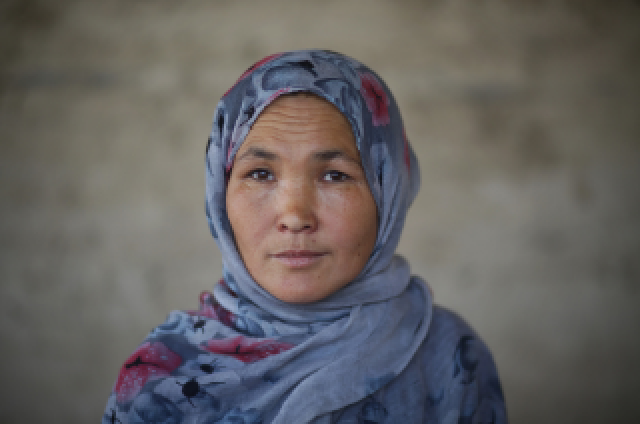
Double Your Impact
This holiday season you can make twice the difference for women and girls affected by conflict. Donate by 14th December and your donation will be doubled at no extra cost to you.
Donate £25 and we will gift you a handmade keyring as a thank you for your generosity! Terms and conditions apply.
Read more stories
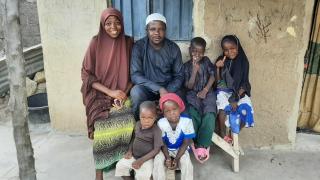
Ikilima
subtitle:
"My friend told me about the programme and said that I would be helped to repair the strained relationship in my family, and I would be taught how to negotiate with him so that we could have discussions as husband and wife."
Faizah
subtitle:
Faizah has always been brave – even aged 13, when her uncles tried to force her into marriage. So, when ISIS attacked her community and warned her not to flee, she harnessed that defiance and dared to find safety. Faizah dreams of a world without war; of peace for her children. Here is her story.
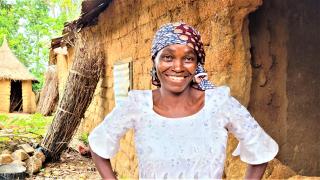
Grace
subtitle:
"I am very proud of myself for achieving all of this, my confidence is at an all-time high right now, and I feel like I can take on the world if the need arises."